




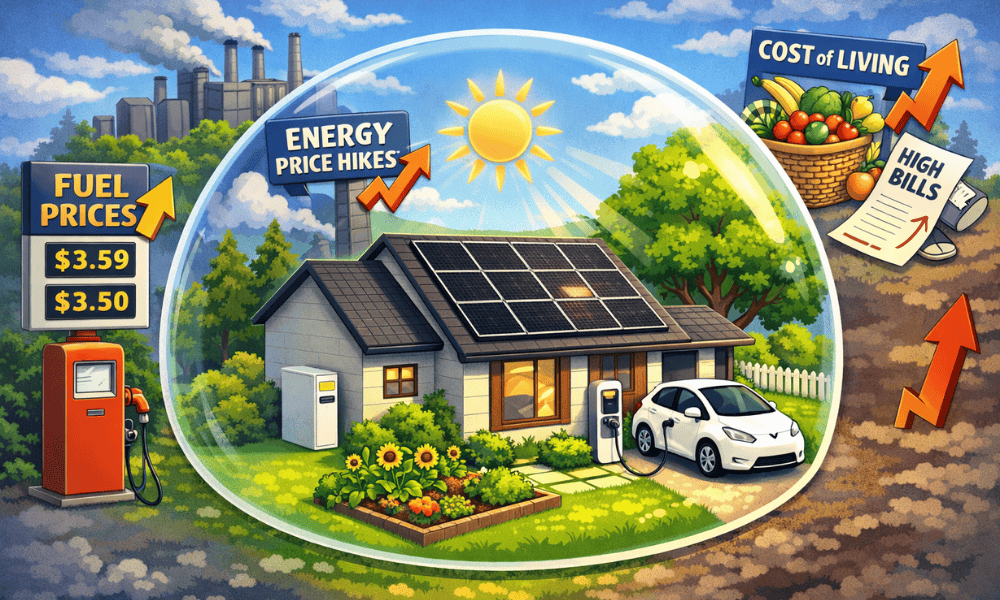
Our lives are split between what we can and what we can’t control. Soaring fuel prices, interest rate hikes, and general cost-of-living increases have many of us questioning what tomorrow will bring. Most of us are not immune to economic fluctuations, and even minor price increases can prompt many of us to rejig our budgets and change our plans.
We can’t control the external influences shaping what we pay, but we can lessen or remove some of their impact. Home batteries, solar systems, electric vehicles, and our energy plans all fall within what we can control.
Why are we paying so much?
Australia, while isolated from much of the world, is not immune to the impact of trade agreements, offshore manufacturing, or the flow-on effect of conflicts and war.
Our economy is strong, but conflicts reveal our many weaknesses. The US-Iran conflict has drawn back the curtain on a prevailing issue many countries face: our reliance on oil. Heavy transport that keeps our country fed, clothed, and comfortable is at risk of halting. Your local supermarket is stocked thanks to the complex network of trucks that are the cogs in Australia’s supply machine. Without fuel, this network falls apart. And then there’s the point A of the supply network: farming and manufacturing. Each of these industries relies on fuel in some form.
Energy prices in Australia have risen due to a mix of global and local pressures. Wholesale costs jumped after coal outages, gas shortages, and global price spikes. Networks and poles still cost billions to maintain and upgrade. Retailers also price in risk as markets stay volatile. The shift to renewables adds short-term costs for transmission and storage. Prices keep rising because demand grows, ageing coal plants exit, and the grid needs constant investment to stay reliable.
Our fuel and energy crises are just a couple of players in a game that seems stacked against us. But the odds are in our favour, should we choose to make some changes to our homes.
Energy independence has never been more important
“Take hold of your energy future.”
It’s a line we’ve been touting for years, and for good reason. Before solar power, Australians were at the mercy of energy retailers and a fluctuating energy market. For a time, solar brought ease to millions of homes across the country. Favourable feed-in tariffs (FiTs) looked to be the relief we all needed. As FiTs dwindled, and power-hungry homes shifted daylight use to nighttime, solar was simply not enough.


Aging infrastructure and planned coal-fired power station closures have also increased the incidence of grid outages. The Australian National Electricity Market clocked in 108 outages1 during the 2025-2026 summer period. Few things make you feel more helpless than a power outage.
The impact of the energy market can be eased or eliminated with a few changes to your home.
Batteries: Expensive, yes, but necessary
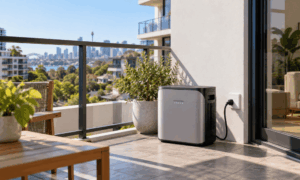
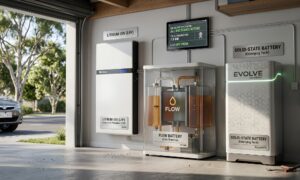
Home energy storage first made landfall in early 2016, and Australians haven’t looked back. Where the media and various industries and political parties have attempted to demonise the technology, batteries have transitioned from a luxury item to a must-have.
The reality is, solar alone will no longer see the drastic electricity bill reductions you are craving. I will always recommend that a household install solar, as you’ll still see a return on investment in a few short years and a noticeable reduction in your bills. But if you’re looking for energy independence – the true control over your energy production and usage – then solar and a battery is the way forward.
There’s no glossing over the fact that batteries require a much larger investment than solar alone. The Cheaper Home Batteries Program has markedly reduced the upfront cost, but you’re still looking at thousands for a decent-sized system.
I will say this: if you have the means, invest.
You’re not just investing in your ability to store and use power, but you’re protecting yourself from external impacts on Australia’s energy market.
The right system will carry you through an outage – indefinitely if needed.
Electric vehicles: Tackling fuel prices
Remember when you first saw a Tesla on the road? It likely elicited a visceral reaction, positive or negative, depending on where you stand on the technology.
Electric vehicles (EVs) are becoming increasingly common, with 11.8% of new cars sold in February 20262 being electric – a record high. While Australia is lagging in the uptake (China’s uptake is 50%, and Sweden is 43%), Aussies are already making plans to swap out their vehicles for electric alternatives.

The appeal is quite simple: no more visits to the petrol bowser.
EV owners have had the last laugh these past few weeks as fuel prices have made our eyes water. Where many of us are rethinking our working from home arrangements and organising car pools for after-school events, EV owners haven’t had to change their driving habits or lighten their wallets.
Pair an EV with home energy storage, and the maths gets mathing.
Energy retailers and plans: More options than ever
Whether you have solar and/or a battery or not, exploring the available energy retailers and their plans is paramount. In 2024, a study3 found that 4 in 5 Australian households had not changed energy plans in the last 12 months. Grandfathering into plans can make sense when prices increase, but energy plans are not the type of contract that you want to be tied to.
Increasing competition in the retail market drives down prices. And the price differences can cost you thousands in just a year alone. From daily supply charges to time-of-use tariffs and rates, you may be paying double (or even more) than you need to be.
Been a while since you changed energy plans? Compare energy plans available for your home and start saving.
If you do have solar and a battery, now is the time to seriously explore Virtual Power Plants (VPPs). VPPs provide you with an additional means to make money from the power you have stored in your battery. When the grid needs stabilising, a VPP will pay you to export some of your stored power for a premium fixed or variable rate.
Explore VPPs available for your home.
Make today the day you take control
The transition doesn’t have to be immediate, but get the ball rolling today.
Solar, batteries, electric vehicles, and energy plans are all within your control. In an out-of-control world, being able to take hold of some of your household’s biggest ongoing expenses and points of safety is so important.
Future-proofing your home is not just a salesy buzzword; it’s the reality we all need to face in an uncertain world. If our homes are our castles, then we need to ensure that we can power them without being at the mercy of a volatile energy market.
Start your journey today with FREE quotes for solar, batteries, and so much more. Energy Matters connects home and business owners with local installers who provide no-obligation and tailored quotes.
- “Australia’s coal plants chalked up 108 outages over summer – 90 of them unplanned”, Renew Economy, 18 March 2026 ↩︎
- “Australia’s EV market share climbs to 11.8%”, AFMA, 11 March 2026 ↩︎
- “REVEALED: 4 in 5 Aussies could be paying too much for energy because of this habit”, Compare the Market, 12 April 2024 ↩︎