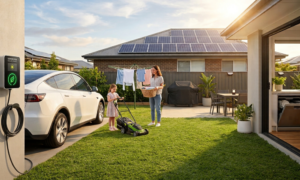





A new survey has revealed that two-thirds of New South Wales residents would not purchase solar rooftop systems in the future if a tax or charge were introduced to send energy back to the grid.
Independent community organisation Solar Citizens surveyed 1000 New South Wales residents and found that almost sixty per cent of respondents were opposed to the ‘sun tax’.
Spokeswoman Ellen Roberts said any proposal that would allow network operators to charge for sending back to the grid in peak periods (like in the middle of sunny days) would significantly impact uptake in the future.
“We fear once these charges are in place they will derail Australia’s uptake of clean solar energy,” she said.
The history of solar export charges
Around 2.6 million Australian homes now have panels installed on their roof, and that number is expected to double in the next ten years.
The issue is that we have reached the tipping point when it comes to exports and the current infrastructure available. Plants designed to handle power converted from coal and gas are not equipped for large spikes of renewable energy sent back during peak periods.
This led the Australian Energy Market Commission (AEMC), the governing body responsible for making the rules for the national electricity market, for releasing a draft proposal that aimed at charging customers to export during peak periods. This proposal was designed to inspire homeowners to purchase batteries.
It was met with widespread opposition. The draft rule has since been amended and puts the onus back on service providers to improve electricity grids.
“At the moment, there are no financial penalties for poor network export service and no rewards for good service,” the AEMC said in a statement.
Something needs to be done for the future of the network
As a result of the current tipping point, a solution needs to be found. Infrastructure will need to be upgraded – but in the meantime, there needs to be a plan to prevent overloads during peak periods.
If there are no changes made to the current market rules, then households with rooftop systems will likely face caps on the amount of energy they can export, which will impact the savings they receive on their bills.
Energy Networks Australia chief executive Andrew Dillon said opposition to the proposals was a “bit silly”. Mr Dillon said a rule change was required to accommodate the two-way flow of electricity between homes and the network.
“The charging arrangements for exports would be balanced by payments at other times,” he said.
The New South Wales state government is currently in talks with the AEMC to find a workable solution.
“I don’t want to see NSW households who have installed rooftop panels in good faith unfairly penalised,” Energy Minister Matt Kean said.
Get a quick solar quotes , or contact us today on 1800 EMATTERS. You can also email our friendly team for expert, obligation-free advice.