



While COVID-19 might have slowed down or stopped many industries in 2020, it was a bumper year for solar installations in Australia, which has seen our renewable energy use surge.
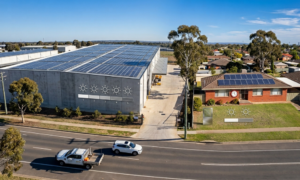
The Clean Energy Council’s recent Clean Energy Australia Report 2021 showed a record 378,451 home solar installations in 2020, providing 3GW of renewable energy to the network – up from the previous record of 2.2GW in 2019.
There were also vital contributions from large-scale wind and solar projects, which added almost another 2GW of capacity, including over 1GW of wind projects – the first time wind has broken the 1GW barrier.
All of this combined means that Australia has now reached 28 per cent of all energy production coming from renewables.
Clean Energy Council chief executive Kane Thornton credited the work being done by the states and territories to the record new clean energy capacity added in 2020.
“Much of this progress was driven by state and territory governments, which introduced a number of world-leading renewable energy policies and targets in 2020,” he said.
The state by state breakdown of solar growth
Tasmania continues to lead the way, with 99.2 per cent of its electricity production coming from renewable energy sources. But South Australia was rapidly heading in the same direction, reaching 59.7 per cent in 2020.
South Australia also made headlines in 2020 for becoming the first region in the world to produce enough renewable energy to meet the entire state’s electricity needs, an achievement they recorded twice last year.
Those two states were followed up by Victoria (27.7 per cent), Western Australia (24.2 per cent), New South Wales (21 per cent) and Queensland (16.6 per cent).
The report also outlined the renewable energy projects that are currently under construction or have the financial commitment to proceed, highlighting the significant investments from both the private sector and the state governments. These upcoming projects include:
- New South Wales: $5.6 billion investment, 3.6GW capacity, 4194 jobs
- Victoria: $5.06 billion investment, 2.95GW capacity, 3584 jobs
- Queensland: $3.44 billion investment, 1.96GW capacity, 2594 jobs
- South Australia: $2.39 billion investment, 1.41GW capacity, 998 jobs
- Western Australia: $2 billion investment, 300MW capacity, 1861 jobs
The significant investment in New South Wales, Victoria and Queensland have these states poised to catch up with South Australia and grow their renewable energy sources in the coming years.
Several big-ticket items have been announced across these states, including the 226MW Murra Warra Wind Farm in Victoria, the 184MW Warradarge Wind Farm in Western Australia, and the 148MW Cattle Hill Wind Farm and 132MW Mt Gellibrand Wind Farm projects in Victoria.
The 110MW Bungala Solar Farm is South Australia’s biggest forthcoming project, while the Nevertire Solar Farm is the largest in New South Wales, at 105MW. At the same time, Queensland has its 100MW Yarranlea Solar Farm in the pipeline.