



Updated in August 2026
Australia, a land of sunshine and vast landscapes, is also at the forefront of the renewable energy revolution. With ambitious goals to reduce carbon emissions and transition to a clean energy future, Aussies increasingly seek green energy providers who align with their values. But with so many options available, choosing the most green energy provider can be overwhelming.
The shift is accelerating fast: Australia’s on-grid electricity reached 42.0% renewables in 2025, and renewable energy accounted for 43.7% of National Electricity Market generation in 2025, exceeding 50% in the December quarter of 2025 for the first time. That momentum makes choosing a genuinely green retailer more meaningful — and more confusing — than ever, because not every retailer marketing “green” plans is genuinely low-carbon.
Key Takeaways
- Environmentally friendly energy companies prioritise clean sources like solar, wind and hydro, and often hold independent accreditation such as GreenPower.
- GreenPower is the government-managed accreditation scheme; its 2024 audit recorded 37 accredited providers, 59 products and 183,912 customers.
- Rankings and scores change frequently — always verify a provider’s current renewable percentage and accreditation before switching.
- Look beyond marketing: check third-party sources such as GreenPower, the Clean Energy Council and the Greenpeace Green Electricity Guide.
- Pairing a green retailer with rooftop solar and a battery delivers the biggest emissions and cost impact.
- Watch for greenwashing — a “carbon neutral” claim is not the same as sourcing 100% renewable electricity.
Are you looking to save money on your electricity bills and reduce your carbon footprint? Solar energy is the perfect solution! Energy Matters can help you get up to 3 FREE solar quotes from pre-qualified and vetted solar firms in your area.
Energy Matters has been a leader in the renewable energy industry since 2005 and has helped over 40,000 Australian households in their journey to energy independence. With Energy Matters, you can be sure you’re getting the best possible deal on solar energy. We only work with reputable solar firms with a proven track record of delivering high-quality solar systems.
What are environmentally friendly energy companies?
Environmentally friendly energy companies are electricity retailers that source most or all of their power from renewable generation, hold independent green accreditation like GreenPower, and actively invest in reducing emissions rather than only offsetting them. Also known as “green energy providers”, “sustainable energy providers” or “renewable energy companies in Australia”, they prioritise clean and sustainable energy sources like solar, wind, hydro, and geothermal power. They strive to minimise their environmental footprint through various practices, such as:
Investing in renewable energy generation: This could involve building and operating solar and wind farms, investing in existing renewable energy projects, or sourcing electricity from renewable sources on the grid.
Promoting energy efficiency: These green energy companies often offer resources and incentives to help customers reduce their energy consumption, lowering their carbon footprint and energy bills.
Transparency and ethical business practices: Many green energy providers prioritise transparency in their energy sourcing and pricing, and some even support community initiatives or environmental causes.
Green credentials explained: GreenPower, Climate Active and NETCC
Not all “green” claims are equal, so it helps to understand the labels:
- GreenPower — a government-managed program where retailers buy accredited renewable energy on your behalf, over and above the grid mix. GreenPower states that almost all electricity retailers in Australia have a GreenPower-accredited product, and its live provider finder lets users filter current offers by state or territory.
- Climate Active — a certification for carbon-neutral products or organisations, which may rely on offsets rather than 100% renewable sourcing.
- NETCC (New Energy Tech Consumer Code) — a Clean Energy Council-administered code covering fair sales and service for solar and battery products.
Why choose an environmentally friendly energy company?
Switching to a green retailer directly cuts the carbon intensity of your household electricity, supports new renewable projects, and can unlock savings through solar feed-in tariffs and battery incentives. There are many compelling reasons to switch to an environmentally friendly energy company:
Reduce your carbon footprint: By choosing renewable energy, you’re directly contributing to the fight against climate change and reducing your personal carbon footprint.
Support sustainable development: You promote developing and adopting clean energy technologies, creating a more sustainable future for future generations.
Enjoy potential cost savings: Many renewable energy providers offer competitive rates, and you may even be eligible for government incentives like feed-in tariffs for solar power.
Peace of mind: Knowing your energy comes from clean sources provides peace of mind and aligns with your values.
The upside is amplified when you pair a green plan with your own generation and storage. Across the NEM, the share of residential customers with solar panels increased from about 27% to nearly 30% between 2023-24 and 2024-25, and at least 402,700 batteries were installed Australia-wide between 1 July 2025 and 17 May 2026 under the Cheaper Home Batteries Program. For more on how this fits the bigger picture, see how renewable energy is powering Australia’s journey to net-zero emissions.
How to choose an environmentally friendly energy company in Australia
To choose a genuinely green energy company, check the retailer’s renewable percentage, confirm current GreenPower accreditation, review transparency around emissions, and compare pricing and service — then verify against independent sources rather than marketing claims. Here are some key factors to consider when choosing a green energy provider:
Renewable energy source: Look for companies that source their electricity primarily from solar, wind, and hydro.
Transparency and ethics: Choose companies that are transparent about their energy mix, environmental practices, and community engagement.
Customer service and pricing: Compare customer service ratings, pricing plans, and available features like smart meters and battery storage options.
Green accreditation: Look for companies accredited by organisations like the Clean Energy Council or certified by the Green Electricity Guide.
Be alert to greenwashing, where a retailer’s marketing overstates its environmental credentials. A “carbon neutral” badge based on offsets is not the same as buying accredited renewable electricity. Our guide on greenwashing in energy and how to spot real vs. fake claims breaks down the warning signs.
How we assess green energy providers
Rather than relying on a single fixed score, we recommend cross-referencing four authoritative signals: GreenPower accreditation status (managed by the Australian, state and territory governments), the Greenpeace Green Electricity Guide ranking, the Clean Energy Council’s certifications, and each retailer’s published renewable energy mix. Because market conditions and product offers change frequently, always confirm the latest details directly with the provider before switching.
Tired of overpaying for energy? Discover your best energy deal with Energy Matters. Compare top offers in your area and find the right plan for your energy needs. Our advanced tool draws on data from a trusted network of retailers, so you can easily evaluate options and choose a plan that gives you greater control and better savings on your electricity and gas bills. Don’t settle for less—switch to a plan that suits your budget and goals with Energy Matters today!
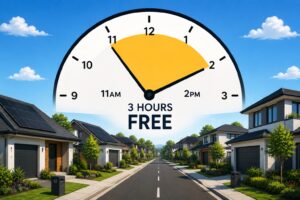
As a 2026-safe benchmark, retailer-specific Virtual Power Plant (VPP) incentives should not be treated as evergreen: the regulator-backed Solar Sharer Offer provides free daytime usage windows of 11am–2pm in NSW and SE Queensland and 12pm–3pm in South Australia, while 2026-27 residential comparison prices range from $1,893 to $2,530 depending on distributor. For NSW, the 2026-27 all-day solar feed-in tariff benchmark is 3.4–6.5 c/kWh from 1 July 2026 to 30 June 2027, so any higher rate should be viewed as a conditional premium offer rather than a baseline.
Shining Stars: Australia’s top green energy providers
Australia’s greenest energy retailers typically combine high renewable sourcing, GreenPower accreditation, and strong independent rankings — with providers such as Diamond Energy, Energy Locals, Momentum Energy and Amber Electric consistently appearing near the top of expert comparisons.
Important: the scores below are drawn from the Green Electricity Guide and are time-sensitive. Rankings, scores and state coverage change as retailers update their energy mix, are acquired, or adjust products. Treat this as a starting point and verify the current position of any provider before switching. GreenPower’s current provider data is a reliable live reference — in the Q4 2025 GreenPower report published in March 2026, Energy Locals had GreenPower coverage in ACT, NSW, QLD, SA, VIC and TAS; Flow Power in NSW, QLD, SA, VIC and TAS; Diamond Energy in NSW, QLD, SA and VIC; and Aurora Energy in Tasmania.
| Energy Provider | What Makes it a Top | Operates In | Score |
|---|---|---|---|
| 1. Diamond Energy | A shining example, Diamond Energy boasts 100% certified renewable energy, carbon neutrality, and investment in community solar projects. They’re certified by the Clean Energy Council and offer flexible, budget-friendly plans. | VIC, NSW, SA, and QLD | 10/10 |
| 2. Momentum Energy | Momentum Energy is another leading provider of 60% renewable energy. A subsidiary of Hydro Tasmania, Australia’s largest producer of renewable energy from hydroelectricity. | VIC, NSW, QLD and SA | 8.6/10 |
| 3. Energy Locals | Energy Locals is a network of community-owned renewable energy retailers. They offer locally sourced clean energy and invest in local renewable energy projects. | NSW, QLD, VIC, SA and TAS | 8.09/10 |
| 4. Aurora Energy | Tasmanian leader Aurora Energy shines in sustainability, ranking top 5 nationally for environmental performance. They champion renewables through green power options, local generation investments, and solar support while fostering community engagement through dividend payments and green loans. | TAS | 8.09/10 |
| 5. Indigo Power | Indigo Power champions a decentralised approach to energy generation, partnering with local communities to build and operate solar and battery storage systems. This empowers communities, fosters energy independence, and reduces reliance on traditional, often polluting, grids. | Eastern Victoria, and most of regional NSW | 7.88/10 |
| 6. CoPower | CoPower (Cooperative Power) is a green energy provider that stands out for its community ownership and democratic management. It is a partnership between Energy Locals, a social enterprise that supports local renewable projects, and CoPower, a cooperative that returns half its profits to its members. | NSW, VIC, SA and QLD | 7.88/10 |
| 7. Nectr Energy | Nectr Energy is a top greenest provider in Australia because it offers 100% renewable energy electricity plans, solar and battery bundle plans, and supports household solar and new renewable energy projects. Nectr Energy is backed by Hanwha Energy, a global leader in clean energy solutions, and has been recognised by Greenpeace and Canstar Blue for its environmental responsibility and sustainability. | NSW, QLD and SA | 7.3/10 |
| 8. Amber Electric | Amber Electric is a wholesale electricity provider that aims to help Australia shift to 100% renewable energy. Unlike traditional retailers, Amber passes on the lower wholesale prices to its customers and encourages them to use more power when renewable energy is abundant in the grid. Amber Electric has been rated as one of the greenest electricity providers in Australia by Greenpeace and Finder, for its innovative model and support for household solar and batteries. | NSW, QLD, SA, VIC and ACT | 7/10 |
| 9. Powershop | Powershop is an electricity retailer that claims to be Australia’s greenest power company, based on its carbon neutral plans, renewable energy sources, and GreenPower options12. However, Powershop’s green credentials have been questioned after it was acquired by Shell, a fossil fuel giant, in 2021. | VIC, NSW, South East QLD and SA | 7/10 |
| 10. Mojo Power | Mojo Power earns its top spot among Australia’s greenest providers by sourcing 100% renewable energy, directly supporting solar farms, and empowering customers with transparent, flexible plans. This GreenPower-accredited retailer lets you choose your level of eco-friendliness, from 25% to 100% renewable electricity and offers smart meter tracking and feed-in tariffs for solar owners. | NSW, QLD, SA, TAS and the ACT | 6.84/10 |
To ground your comparison in current, verifiable data, cross-check any retailer table against GreenPower’s official records: the GreenPower 2024 Annual Audit Report recorded 183,912 customers buying 2,061,522 MWh of GreenPower across 59 accredited products from 37 providers. You can also filter live offers by state in the GreenPower Find a Provider tool, and review the methodology in the GreenPower 2024 Annual Audit Report and the IPART solar feed-in tariff benchmarks.
Beyond the big names: Unearthing hidden gems
Smaller regional and community-owned retailers often deliver outstanding environmental value by investing directly in local renewable projects — so it pays to research options in your area, not just the national brands. While the companies above are stellar, don’t overlook smaller, regional providers doing incredible work. Prioritise those with strong community ties and a focus on local renewable energy generation. Remember, every switch to a green provider makes a collective impact!
Community energy is also feeding directly into the grid transition. As of January 2026, 63,100 customers with installed batteries were participating in virtual power plants — around 24% of the 262,400 battery customers identified by the ACCC, showing how household storage is becoming part of a cleaner, more flexible system.

Making the switch: Powering your home with green choices
Making the switch to green energy starts with choosing an accredited provider, then reducing consumption, installing solar and storage, and advocating for clean-energy policy — together these steps cut both your bills and your emissions. Choosing a green energy provider is the first step. Here are some additional tips to power your home sustainably:
- Reduce energy consumption: Implement energy-saving habits like using LED lights, switching off appliances when not in use, and investing in energy-efficient appliances.
- Explore solar power: Consider installing solar panels to generate your own clean energy.
- Advocate for change: Get involved in local sustainability initiatives and urge policymakers to support renewable energy development.
- Understand your certificates: Learn how the market works by reading up on what a Renewable Energy Certificate (REC) is and how it affects you.
- Explore official resources: Browse trusted Australian renewable energy organisations and agencies for independent guidance.
Remember …
Every action counts! By choosing green energy providers and adopting sustainable practices, we can collectively build a cleaner, brighter future for Australia. So, power up your eco-consciousness and switch to a greener tomorrow!
Conduct your own research and compare plans to find the best fit for your needs and budget. With a little effort, you can harness the power of green energy to illuminate your home and positively impact the planet. Let’s all shine a light on a sustainable future!
Conclusion: Choosing green with confidence in 2026
The greenest energy company for you is the one that combines genuine renewable sourcing, verifiable accreditation, and a plan that fits your household. With renewables now supplying a record share of Australia’s grid and battery uptake surging, there has never been a better time to align your electricity choice with your values. Verify claims against GreenPower and the Clean Energy Council, compare current offers, and — where possible — pair your green plan with rooftop solar and storage for the biggest impact.
Switching to a better plan?
Switching to a better plan? You may already have an energy plan but want more power or to shop for a better deal.
Energy Matters‘ “Free Energy Bill Comparator” is a cutting-edge energy bill tool that compares your area’s most competitive retail offers. We collect the data from our wide range of trusted retailers, allowing you to decide on the switching plan and find the best deal for your needs.
If your goal is to get more electricity and minimise the cost of your gas and electricity bills, switch to a better plan now!
Frequently Asked Questions
Which Australian energy company is the most environmentally friendly?
Independent rankings such as the Greenpeace Green Electricity Guide consistently place 100% renewable, community-focused retailers like Diamond Energy near the top, thanks to certified renewable sourcing and carbon-neutral operations. Because rankings and energy mixes change, always confirm a provider’s current accreditation and renewable percentage before switching.
What is GreenPower accreditation?
GreenPower is the Australian government-managed scheme in which accredited retailers purchase renewable energy on your behalf, over and above the standard grid mix. Its 2024 annual audit recorded 37 accredited providers offering 59 GreenPower products to 183,912 customers, who bought 2,061,522 MWh of accredited renewable energy.
How do I switch to a green energy provider in Australia?
Compare accredited retailers by renewable percentage, pricing and service, choose a plan (ideally GreenPower-accredited), then sign up online or by phone — your new retailer handles the transfer with no interruption to supply. Using a comparison tool makes it easy to see the most competitive offers in your area.
Is GreenPower worth paying extra for?
GreenPower typically adds a modest premium to your bill, but it directly funds new accredited renewable generation beyond the grid average, making it one of the most transparent ways to guarantee your electricity supports clean energy. Whether it’s worth it depends on your budget and how much you value verified environmental impact.
How can I tell if a “green” energy claim is genuine?
Check for independent accreditation like GreenPower, look at the retailer’s published renewable percentage, and distinguish between “carbon neutral” (which can rely on offsets) and genuinely 100% renewable sourcing. Cross-referencing GreenPower, the Clean Energy Council and the Green Electricity Guide is the best way to avoid greenwashing.