





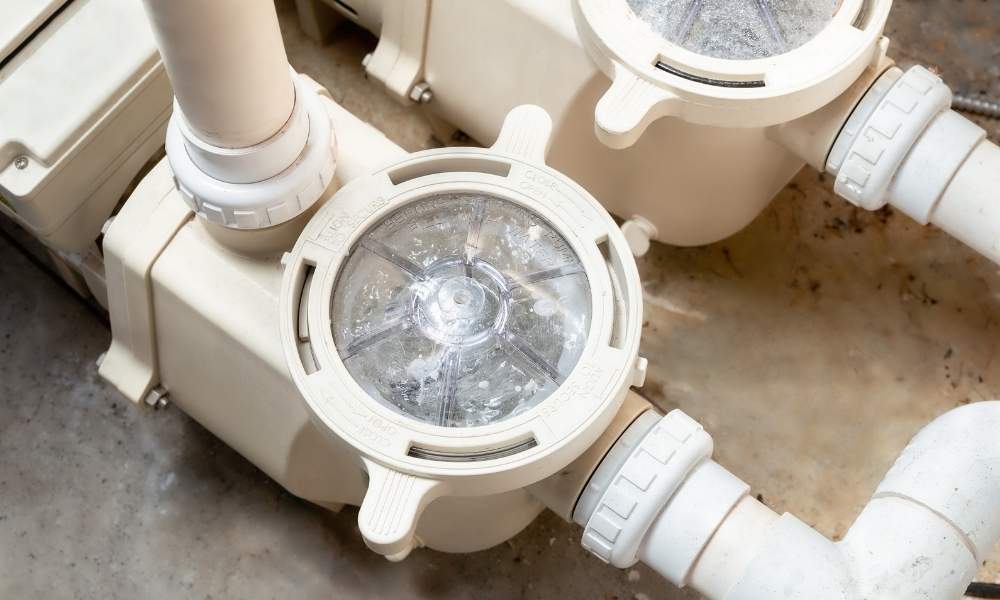
A standard 1,100 watt pool pump and chlorinator running 8 hours a day adds roughly 17 per cent to the household electricity bill. In South East Queensland, at current electricity rates, that works out at around $1,100 a year just to keep the water circulating.
That is a large, predictable, schedule load. The pool pump has no fixed time requirement. Filtration quality depends on total daily hours, not when those hours fall. Most pool owners have never changed their timer from the setting the installer chose years ago. For a solar household, that default schedule is almost certainly costing money it does not need to spend.
Why a pool pump is easier to shift than almost any other appliance
A dishwasher needs to finish before someone empties it. A washing machine needs to finish before clothes are left sitting wet. A pool pump has no equivalent constraint. It runs, filters the water, and stops. The pool doesn’t care whether that happened at 8am or 1pm.
It’s so flexible that it is one of the best candidates for solar scheduling in the home. It draws a consistent 1-2.5 kW depending on size, which manageable for most rooftop systems. It can run in multiple shorter blocks across the day instead of one continuous period. And shifting it doesn’t require any changes to your household routine.
Running a pool pump during peak grid pricing hours instead of during solar generation hours can mean paying 40-50 per cent more for exactly the same filtration outcome.
3 ways to connect your pool pump to your solar system
Start here: Adjust the timer
The most overlooked fix costs nothing and will only take you 5 minutes.
Most pool pump timers were set at installation and have never been adjusted. If the pump currently runs from 7am to 3pm or 6pm to 10pm, it’s running outside the peak solar generation window for much of its cycle.
Moving the timer to start at 10am to finish by 3pm shifts the entire load into the hours when a rooftop system is most likely generating surplus. This doesn’t need any new equipment. The timer box is usually mounted next to the pump while the on and off pegs are adjustable by hand.
Just like all things, this has its limitations, too. A fixed timer can’t respond to weather. On a cloudy day, the pump runs regardless of what the solar system is producing. It may be drawing from the grid without you realising it.
For many, a timer adjustment is enough to make a material difference in annual pool electricity costs. For others living in areas with variable cloud cover, the next level is where the real savings sit.
The upgrade: A smart pool pump controller
A dedicated smart controller connects to the solar system’s live output and adjusts the pump schedule based on actual generation rather than a fixed time.
When cloud cover reduces output, the controller shifts the schedule. When the sun returns, it resumes. The pump still runs for the same total number of hours each day, but those hours align with real solar generation rather than a fixed window that may or may not match what the panels are producing.
For a household in SE QLD or coastal NSW, where afternoon cloud cover is common enough to matter across a year, the difference between a timer and a smart controller is measurable in annual electricity costs.




The full picture: HEMS integration
A Home Energy Management System (HEMS) connects to the pool pump to the broader household energy system, including solar generation, battery state of charge, EV charging, and hot water, and coordinates them together rather than managing each load in isolation.
The Solahart HEMS, for example, coordinates the pool pump alongside hot water and EV charging to run when solar energy is available, monitored remotely through the atHome app. Energex describes the pool pump as one of several loads a HEMS manages to ensure electricity is used at the lowest price, alongside solar PV, battery storage, hot water, and EVs.
In a household with a battery, the HEMS can prioritise filling the battery before running the pool pump, then resume once storage is sufficient. Without a battery, it pauses the pump when a higher-priority load comes on and resumes when surplus is available.
HEMS integration requires compatible hardware throughout and an installer familiar with the specific system. It’s the right level for homes already planning a battery or EV charger installation, where the pool pump becomes one more managed load in a coordinated system rather than a separate scheduling problem.
If you also have a solar pool heating system
Some pool owners run a separate pump to circulate water through solar thermal collectors on the roof, heating the pool without an electric heater. This is a different system from the filtration pump. The heating pump should ideally run when the collectors are warm enough to transfer heat to the water, which is generally midday and early afternoon.
The same scheduling logic applies: a timer set to run the heating pump between 10am and 3pm is the starting point. A smart controller that responds to actual solar output is the next step.
What to check before assuming you need new equipment
Before investing in a smart controller or HEMS integration, find out 3 things:
- What time is your pool pump currently set to run? If you’re not sure, check the timer box next to the pump. Most times have 24-hour dial with pegs marking the on and off periods.
- When does your solar system generate its strongest output? Open your monitoring app and look at a recent clear day’s generation curve. The peak is typically between 10am and 2pm.
- Do these two windows align? If the pump runs from 5pm to 11pm, there’s no solar overlap at all. If it runs from 7am to 3pm, the overlap is partial. Either way, a timer adjustment is the first move.
A timer shift alone with not deliver the precision of a smart controller, but it’s the correct starting point and it costs nothing.
A pool pump running on grid power at 6pm costs roughly around 3-4 times more per kWh than the same pump running on surplus solar at midday. For those spending $1,100 a year on pool electricity, shifting that load into the solar window is the single highest-return task available that needs no new equipment.
The timer is where to start. A smart controller is where to go next if the timer is not enough. HEMS integration is right for households already building out a battery and EV charging system. None of these require a new pump. They need connecting what the pump already does to when the solar system is already generating.