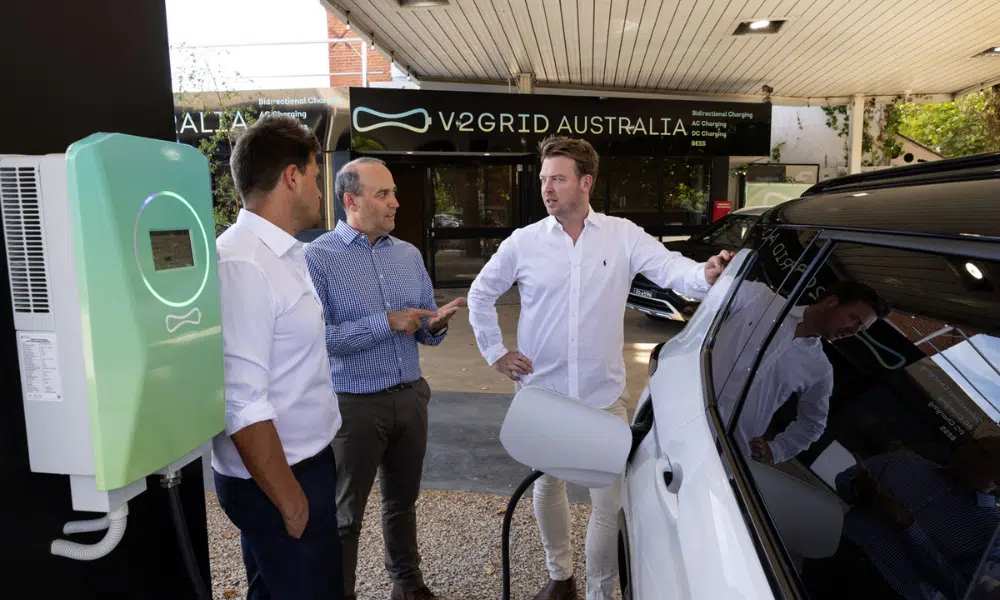

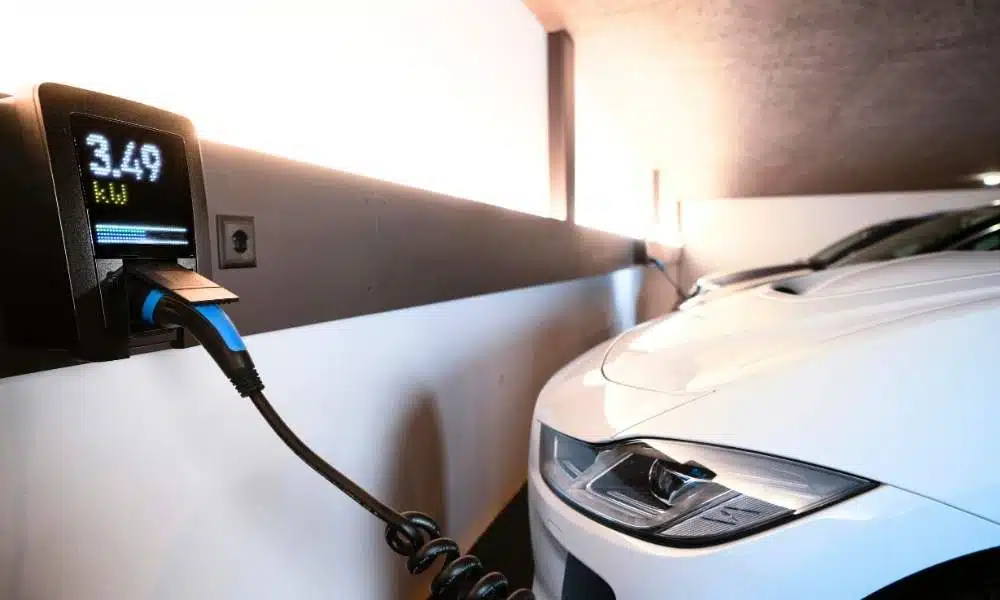
Most conversations about switching to an electric vehicle focus on the car itself, such as range, price, brand, and how quickly it can charge. But once the car is in the driveway, those factors fade into the background. What actually shapes the experience is how it charges at home every day.
Charging isn’t really a one-time decision, but a part of a routine: plugging in overnight, managing when electricity is cheapest, and working around how much the car is used during the week. Some drivers get by with a standard power socket. Others find that it quickly becomes too slow or inconvenient, especially with higher daily kilometres or larger batteries.
That’s where the gap often appears between expectation and reality. The convenience, cost savings, and overall practicality of running an EV are closely tied to the home setup.
How charging at home actually fits into daily use
For most EV owners, charging doesn’t happen in big, dramatic sessions. It happens in small, consistent top-ups that follow daily routines. You get home, plug in, and the car quietly refills overnight. By morning, it’s ready again.
That works well if your driving is predictable. Short commutes, school runs, and local trips usually use far less energy than a full battery, so even a slow charge can keep up. In these cases, the car rarely drops low enough to cause concern. It simply cycles between partial use and partial recharge.
Where things start to shift is when usage becomes less predictable. Longer drives, back-to-back trips or limited time at home can make overnight charging less reliable. A standard socket that worked fine before can start to feel slow, especially if the battery needs to recover more range in less time.
This is why home charging isn’t just about plugging in. It’s about how well your setup matches your routine, like how long the car is parked, how much energy you use each day, and how quickly you need it ready again.
When a standard socket stops being enough
A regular household socket can work for EV charging, but only within certain limits. It delivers a slow, steady charge, which suits drivers covering shorter distances and leaving the car plugged in for long periods. For some, that’s enough to keep things ticking over without needing additional hardware.
When demand increases, that’s when the limitations show up. Larger batteries take longer to fill. Higher daily mileage means more energy needs to be replaced each night. And if the car isn’t parked for long enough, a slow charge can fall behind.
In practical terms, that’s when charging starts to feel restrictive rather than convenient. You may need to plan around when the car is plugged in, rather than simply treating it as part of the routine. Missing a night of charging or coming home late can have a knock-on effect the next day.
This is usually the point where households start considering a dedicated home charger. Not because the socket stops working, but because it no longer keeps up with how the car is being used.
Where a dedicated home charger changes the experience
A dedicated home charger isn’t just about the speed of charging. It actually changes how predictable and flexible the whole setup feels.
Instead of relying on long overnight windows, you can recover a meaningful range in a few hours. That matters on days when the car gets home late, needs to go out again, or has covered more distance than usual. What used to feel like a constraint becomes something you don’t need to think about as much.
It also opens up better control over when energy is used. Many chargers can be timed to run during off-peak periods, which helps manage electricity costs. For those on time-of-use tariffs, that can make a noticeable difference over time.
There’s also a practical side to it. Dedicated chargers are designed for regular use, with built-in safety features and more reliable performance than a standard socket. If you’re charging every day, that consistency becomes part of the overall experience.
At this point, charging shifts from something you work around to something that fits more naturally into daily life.




How solar and tariffs change the equation
Once charging is happening at home, cost becomes just as important as convenience. This is where electricity tariffs and solar start to shape the experience.
For households on time-of-use tariffs:
- Charging overnight during off-peak hours can significantly reduce running costs
- The gap between peak and off-peak rates adds up over time
- Charging becomes less about convenience and more about timing
For households with solar:
- Charging during the day can use excess solar instead of exporting it
- This can improve the value of your solar generation
- The car effectively becomes another way to use energy produced on-site
Where it doesn’t always line up
- The car may not be home during the day
- Solar output may not match charging needs
- Some households still rely mainly on overnight charging
In practice, the cost advantage of an EV isn’t fixed. It depends on how well charging fits your tariff, your solar setup, and when the car is actually at home.
Where home charging still falls short
Even with the right setup, home charging doesn’t cover every scenario. There are still situations where either becomes less practical or needs to be supplemented.
Long-distance driving:
- Daily charging works well for routine use, but longer trips still rely on public fast chargers
- Home charging is about consistency, not quick turnaround
Limited access to parking:
- Apartments, shared parking, or street parking can make home charging difficult
- Installation may not be possible or may depend on building approval
Electrical capacity constraints:
- Some homes may need upgrades to support a dedicated charger
- Older switchboards or limited capacity can add cost or complexity
Multiple EV households
- Charging more than one vehicle introduces scheduling or load management considerations
- What works for one car may not scale as easily
Home charging handles most of the daily needs, but it doesn’t remove the need for planning altogether. In some cases, it works best as part of a broader setup that includes access to public infrastructure.


What a practical home setup actually looks like
In practice, most home charging setups aren’t designed to be perfect. They’re built around what works consistently, without needing much thought day to day. That means doing very little. If the car is driven short distances and sits parked for long periods, a standard socket can quietly keep things topped up. It’s slow, but it doesn’t get in the way and for low usage, that’s often enough.
As usage increases, the setup tends to change. A dedicated charger becomes less about speed and more about flexibility. It shortens the time needed to recover range and removes the need to think too much about when the car is plugged in. You don’t have to rely on a full night every time or worry about falling behind after a longer day.
Solar adds another layer, but again, only if it fits naturally. Some households charge during the day to make use of excess generation. Others don’t, because the car isn’t there. In those cases, overnight charging still does most of the work.
What these setups have in common is that they match the rhythm of the household. They don’t rely on ideal conditions or constant adjustment. They simply fit into how the car is used, and that’s what makes them work over time.
What this means for households considering the switch
For most households, the practicality of an EV comes down to how well charging fits into daily life.
That’s shaped by simple factors: how far the car is driven, how long it’s parked, and when it’s usually at home. These determine whether a basic setup is enough or whether a faster, more flexible option is needed.
Costs follow the same pattern. Electricity tariffs, solar, and charging habits all influence what running the car actually costs over time.
In the end, the difference isn’t the vehicle itself. It’s whether the home setup supports it in a way that feels straightforward and consistent day to day.
Energy Matters has been in the solar industry since 2005 and has helped over 40,000 Australian households in their journey to energy independence.
Complete our quick Solar Quote Quiz to receive up to 3 FREE solar quotes from trusted local installers – it’ll only take you a few minutes and is completely obligation-free.