
If you installed solar several years ago, there’s a good chance your system wasn’t designed with batteries in mind.
Many of the systems installed in the mid to late 2010s were built around smaller panel sizes and standard string inverters. They still work, but they weren’t set up for how households are using energy today, especially with higher usage from air conditioning, electric vehicles, and rising electricity prices.
Now, with changes to battery rebates from May 1, 2026, more households are looking at adding storage. The challenge is that adding a battery isn’t always as simple as connecting it to what you already have.
In some cases, your existing system will handle it with a straightforward inverter upgrade. In others, the panels or inverter will limit what you can do, or how much value you get from a battery.
Before deciding what to upgrade, it helps to understand how your current system is set up and where the constraints are.
Check what your system can already support
Before looking at upgrades, start with what’s already on your roof and wall. Most of the decision comes down to two things: your panel output and your inverter.
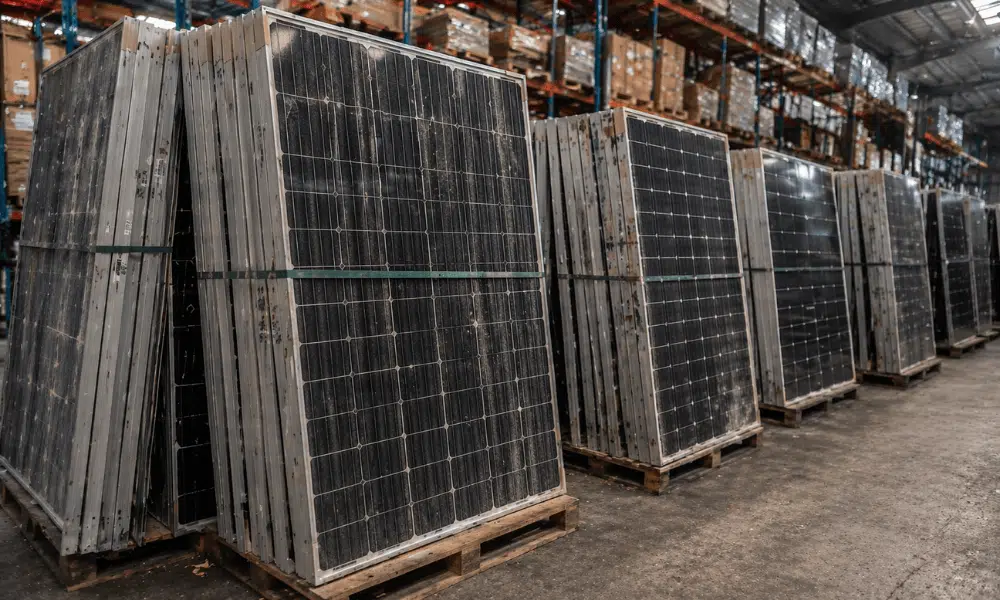
If you can, check the label on your panels. Older systems often used 250W to 300W panels, while newer systems are typically 400W or higher. The wattage tells you how much each panel can produce, which directly affects how much energy your system can generate during the day.
Then look at your inverter. There should be a label showing its size, usually in kilowatts (kW). Many Australian homes have systems advertised as “6.6kW,” but the inverter is often only 5kW. That’s normal, but it also means there’s a limit to how much power the system can process at any one time.
The age of the inverter also matters. Inverters installed before around 2018 are usually not designed for battery integration. They can still work well for solar generation, but adding a battery may require replacing the inverter rather than simply adding to it.
Once you know your panel wattage, system size, and inverter type, it becomes much easier to see which upgrade path makes sense.
Upgrade your inverter if your panels still hold up
If your panels are still producing well and are in good condition, the simplest path is often replacing the inverter.
This is common in systems installed around 2017 to 2020. The panels are usually 300W or higher and still have plenty of life left, but the inverter is a standard grid-only model with no battery support.
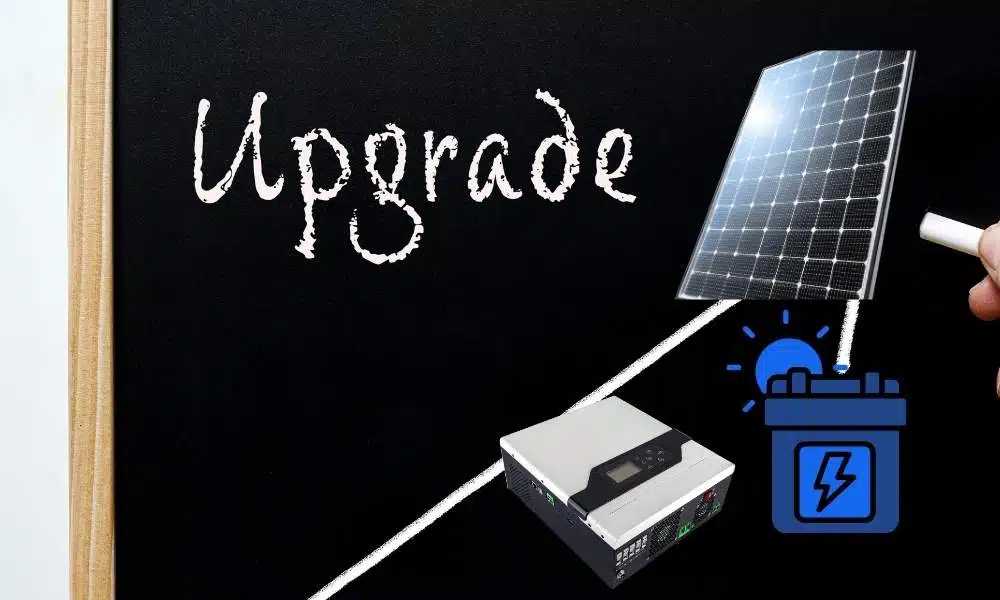
Switching to a hybrid inverter allows you to connect a battery without changing anything on the roof. It also gives you more control over how your solar energy is used, stored, or exported.
This approach works best when:
- Your solar panels are still performing close to their original output
- The system size is already enough to cover a good portion of your daily usage
- You want to add a battery now, without a full system replacement
The limitation is that your system will still be capped by the panels. If you’re running older 250W panels or a smaller system, the total energy available to charge a battery may be lower than expected.
In that case, the inverter upgrade makes the system battery-ready, but it doesn’t increase how much energy you generate each day.
Add more panels if your inverter has spare capacity
Some systems already have room to generate more, but aren’t fully using it. A common example is a “6.6kW system” with a 5kW inverter. In many cases, that inverter can legally and safely handle more panel capacity than what was originally installed. This is known as oversizing, and it’s already built into a lot of Australian systems.
If your roof has space and your inverter allows it, adding newer high-efficiency panels can lift your total generation without replacing the core system.
This approach works best when:
- Your inverter is relatively modern and still under warranty
- You have unused roof space with good sun exposure
- Your current system struggles to cover daytime usage
Newer panels, often 400W and above, can generate more energy from the same area compared to older modules. That means you can increase output without needing to expand your roof footprint significantly.
The catch is that not all systems can be expanded easily. String limits, inverter capacity, and installation rules can restrict how many panels you can add. In some cases, the cost and complexity of expanding an older system may not be worth it compared to upgrading other components.



Replace the system if it’s reaching its limits
If your system is around 8 to 10 years old or more, upgrading individual parts can start to work against you.
Many of these systems were installed at 1.5kW to 3kW, using panels in the 150W to 250W range. Even if they’re still running, the total output is often too low for today’s households, especially if you’re planning to add a battery.
Modern systems are significantly more efficient. A root that once held a 3kW system can now support 8kW to 10kW or more, using fewer panels with higher wattage. That changes how much energy you can generate during the day and how much you can store for use at night.
Replacing the full system also resets the warranty. Instead of managing a mix of older panels and newer components, everything is covered under the current product and performance guarantees, which are typically 25 years for panels.
This approach makes the most sense when:
- Your current system is small and struggles to cover daily usage
- Panel output has noticeably declined over time
- You’re planning to add a battery and want enough generation to charge it properly
In these cases, starting fresh often delivers more value over time than trying to extend the life of an older setup.
Compare the options side by side
Once you know what your system can and can’t do, the decision usually comes down to cost, output, and how long you plan to keep the system.
Here’s how the main upgrade paths compare:
| Option | Upgrade inverter only | Add more panels | Replace entire system |
| Upfront cost | Lower | Moderate | Higher |
| Energy output | No change | Increases | Maximised |
| Battery ready | Yes (with hybrid inverter) | Depends on inverter | Yes |
| System lifespan | Limited by panels | Mixed (old + new) | Fully reset |
| Installation work | Minimal (no roof work) | Roof work required | Full replacement |
| Best suited for | Newer panels, older inverter | Spare inverter capacity | Older or undersized systems |
Each option solves a different problem.
If your system already produces enough energy, upgrading the inverter is often enough to add a battery.
If your system falls short during the day, adding panels can lift output without replacing everything.
If both the panels and inverter are dated, replacing the system gives you a clean starting point and enough capacity to support a battery properly.
What to check before the May 1 changes
If you’re planning to add a battery, the timing now matters more than it did before.
From May 1, 2026, the rebate level drops and larger batteries are treated less favourably under the new rules That doesn’t change whether your system can support a battery, but it does affect how much you pay to install one.
Before making a decision, it’s worth checking a few key details:
- Inverter age and type: If your inverter was installed before around 2018, it’s unlikely to support a battery without being replaced.
- Panel wattage and system size: Systems built with 250W panels or smaller total capacity may not generate enough surplus energy to charge a battery effectively.
- Available roof space: If you’re considering adding panels, you’ll need enough usable space with good sun exposure.
- Current daytime usage: Higher daytime consumption can reduce how much solar is available to store, even if your system is technically large enough.
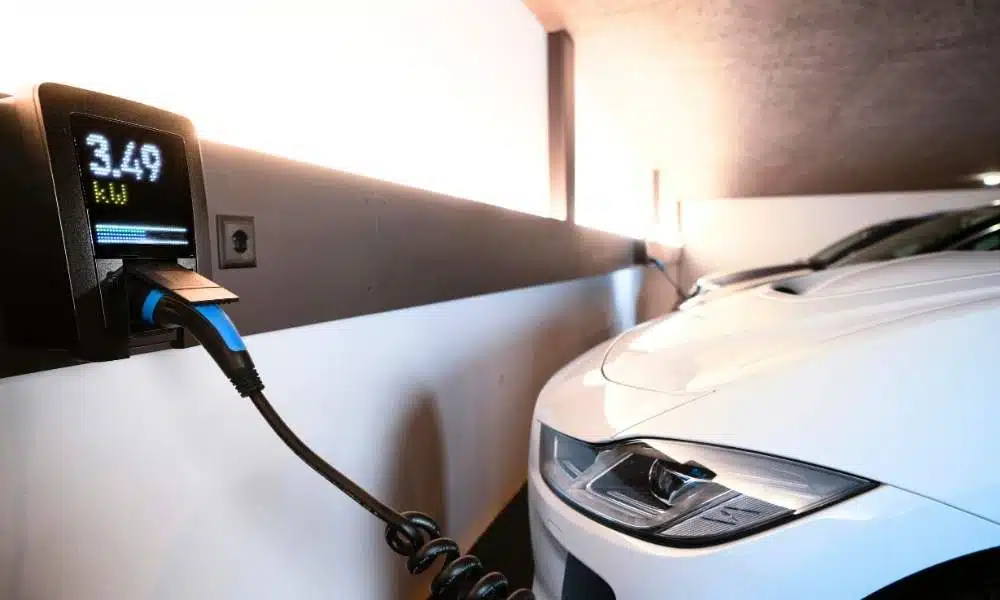
- Future plans: If you’re thinking about an EV, electrification, or joining a virtual power plant, your system needs to be sized and configured for that.
These checks help avoid upgrading in stages that don’t align. In some cases, doing everything once is more cost-effective than making incremental changes that need to be revisited later.
Make the upgrade decision based on how you’ll use the system
At this point, the decision isn’t just about what your system can do today, but what you want it to handle over the next 5 to 10 years.
If your usage is fairly stable and your system already covers most of your daytime demand, upgrading the inverter to support a battery may be enough. This lets you store excess energy and reduce reliance on the grid without changing the rest of the system.
If your usage is increasing, for example, with an electric vehicle, a pool, or more time spent at home, then generation becomes more important. In that case, adding panels or replacing the system can make more sense than relying on your current output.
For older or smaller systems, replacing everything often aligns better with how households are using energy now. It gives you enough capacity to generate, store, and manage energy without running into limitations as your usage grows.
The key is to match the upgrade to your expected usage, not just your current setup. That’s what determines whether the system will still work for you a few years from now.

Make the decision based on your system
There isn’t one upgrade that fits every setup.
If your panels still perform well, upgrading the inverter may be enough to add a battery. If your system falls short during the day, adding panels can lift output. If both are limiting you, replacing the system gives you a clean starting point.
The May 1 changes affect cost, not what your system needs. The priority is getting the setup right first.
Energy Matters has been in the solar industry since 2005 and has helped over 40,000 Australian households in their journey to energy independence.
Complete our quick Solar Quote Quiz to receive up to 3 FREE solar quotes from trusted local installers – it’ll only take you a few minutes and is completely obligation-free.