





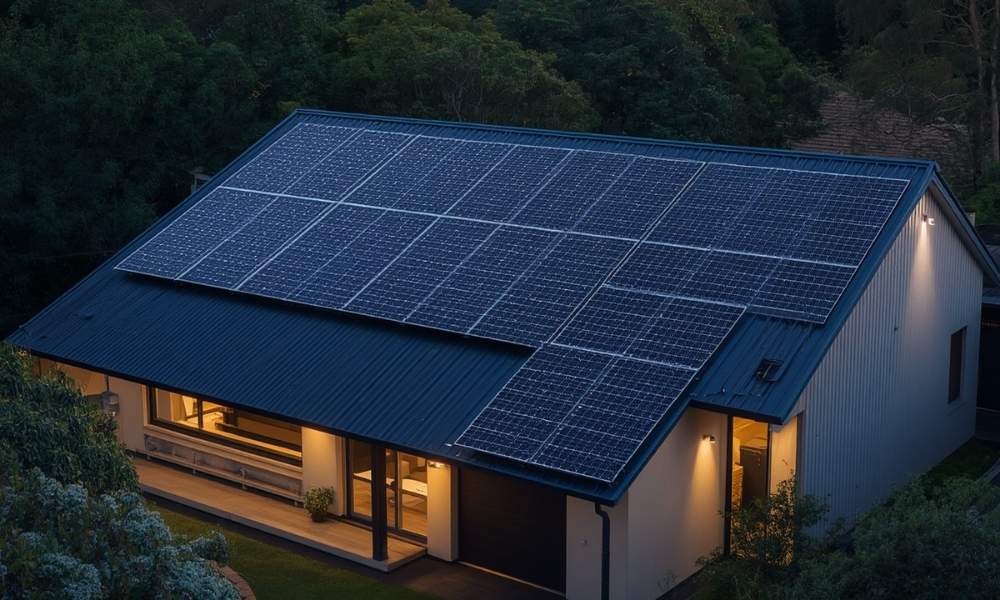
Between 2009 and 2013, state governments across Australia offered premium feed-in tariffs FiTs to kickstart rooftop solar adoption. The rates were extraordinary by today’s standards. Victoria and NSW offered 60 cents per kWh for electricity exported to the grid. Queensland and South Australia offered 44 cents. The ACT offered 47.5 cents. For a small 1.5 to 3 kW system exporting most of its generation, these rates represented a genuine financial return that made the upfront cost of installation straightforward to justify.
Those contracts have largely expired. Victoria’s Premium Feed-in Tariff scheme ended on 1 November 2024. NSW’s 60-cent scheme ended in December 2016. Most Queensland premium contracts have since wound up. The households that installed during those years, collected premium rates for a decade or more, and filed the whole thing under “sorted”, are now exporting at 3 to 5 cents per kWh into a market that has fundamentally changed around them.
According to the Clean Energy Regulator, around 25 per cent of current home battery installations in Australia are return solar customers: households with older, smaller systems whose generous feed-in tariff contracts have expired, now upgrading to a 10 to 15 kW solar system paired with a 20 to 30 kWh battery. The upgrade path available to this cohort in 2026 is materially better than anything that existed when they first installed.
This post explains what that upgrade looks like, what the numbers are, and one important caveat that applies to some households before they do anything at all.
Before anything else: A warning for SA and ACT households
If you are in South Australia or the ACT and are still receiving a premium feed-in tariff, read this section before proceeding.
Some South Australian households remain on the 44-cent buyback rate until 30 June 2028. Some ACT households will receive 47.5 cents until 2031. But if these solar households upgrade their systems, even just adding panels, they may lose their premium feed-in tariff rate entirely.
This is not a minor administrative detail. A household still receiving 44 cents per kWh for exported solar is in a genuinely different financial position from one receiving 3 to 5 cents. The upgrade case that applies to most of this cohort does not automatically apply here.
Before making any changes to your system, confirm with your retailer exactly what constitutes a system modification under your feed-in tariff agreement. For some SA and ACT households, waiting until the contract naturally expires is the financially correct decision. For everyone else in Victoria, NSW, and most of Queensland, the contracts are already gone.
The economics your old system was built for
A household that installed a 1.5 kW system in 2010 and exported at 60 cents per kWh was operating in a fundamentally different financial environment. The design logic was clear: generate as much as possible, export all of it, earn the premium rate. System size was often constrained by the feed-in tariff terms, and self-consumption was largely irrelevant because every unit sent to the grid earned far more than the cost of buying electricity from the grid.
That logic has completely inverted.
The average Australian household now pays between 30 and 35 cents per kWh to import electricity from the grid. Feed-in tariffs for most households sit at 3 to 5 cents. Every kWh of solar energy used directly in the home is worth 30 to 35 cents in avoided import costs. Every kWh exported earns a fraction of that. The system that was perfectly designed for 2012 is now perfectly misaligned for 2026.
There is also a hardware reality that compounds the economics. The inverter in a system installed 12 to 15 years ago is at or near the end of its design lifespan. The panels have degraded at roughly 1 per cent per year, meaning a 2010 system is producing around 85 per cent of its original rated output. And the system size, typically 1.5 to 3 kW, was never designed to cover a household’s full electricity demand, because in the premium FiT era, covering demand was not the point.
The combination of expired contracts, ageing hardware, and a small system designed for a different purpose is the situation most of this cohort is now in. The question is what to do about it.





What the upgrade actually looks like
The return customer profile emerging from the current data is consistent: a small pre-2013 system replaced or supplemented by a 10 to kW solar array, paired with a 20 to 30 kWh battery. Here is what the numbers look like in 2026.
The new solar system
A standard 6.6 kW system installed in 2026 saves a typical Australian household between $1,200 and $1,900 per year through reduced electricity imports. A 10 kW system saves proportionally more, and for a household that has electrified heating, hot water, or EV charging, a larger system is increasingly the right sizing decision.
The federal STC rebate applies to new panel installations regardless of whether a previous system existed. For a 6.6 kW system, the rebate currently saves $1,500 to $2,000 off the upfront cost. A 10 kW system reduces costs by $2,000 to $3,000. This rebate decreases each year until 2030: the deeming period dropped from 6 years to 5 on 1 January 2026, meaning the same system attracts roughly $500 to $600 less in rebate value than it did in 2025. Acting this year captures more value than waiting until next year.
The battery
The federal Cheaper Home Batteries Program currently offers approximately $244 per kWh of battery capacity for the first 14 kWh, representing around 30 per cent off the upfront cost. For a 20 kWh battery, the rebate is meaningful. The Clean Energy Regulator’s data suggests the new sizing sweet spot for Australian households sits at 20 to 30 kkWh, following the May 2026 restructure that reduced incentives for very large systems while maintaining full support for standard household sizes.
A 20 to 30 kWh battery covers most households’ evening consumption through the peak pricing window of 4pm to 9pm, the period when grid electricity is most expensive. For a household on a time-of-use tariff, this is where the battery earns its cost back most efficiently.
The combined case
A 10 to 13 kW solar system paired with a 20 kWh battery, with the STC and battery rebates applied, gives a return customer a materially lower electricity bill, protection against evening peak pricing, and a system sized for self-consumption rather than export income. Over 20 years, a well-maintained solar and battery system can provide a total return of $30,000 to $50,000 in avoided energy costs. Studies also show that solar and battery storage can significantly increase the resale value of a home.
Why this is a better opportunity than it was in 2022
Panel prices have continued to fall since the early 2020s. System quality has improved. Inverter technology is more capable. And the battery rebate, despite the May 2026 restructure, still delivers approximately 30 per cent off a product that did not exist at a viable residential price point three years ago.
The element working against waiting is the STC rebate, which decreases on a fixed schedule regardless of what happens to panel or battery prices. It dropped at the start of 2026 and will drop again at the start of 2027. The battery rebate also tapers every six months under the new structure. Neither change makes the upgrade unviable, but each one makes it marginally less financially attractive than the period before it.
The more important point is that the cost of staying on an ageing small system in the current electricity market compounds quietly. A 2 kW system exporting at 3 cents per kWh, while the household imports at 30 to 35 cents through the evening, is not a neutral position. There is a growing gap between what that household’s roof could be doing and what it is actually doing.

The question worth sitting with
The household that installed solar in 2010 made a good decision for that time. The premium feed-in tariff delivered exactly what it promised. The system paid itself off, earned a return, and ran reliably for a decade or more.
But that household is now running a 15-year-old system, designed for a market that no longer exists, likely with an ageing inverter approaching end-of-life, exporting at a fraction of what it once earned, and sized for a purpose, export income, that is no longer where the financial value sits.
The upgrade is not about chasing a new incentive. It is about realigning a real asset, a roof, a household, a set of energy habits, with the economics that actually apply now.
If your original system is more than ten years old and your premium feed-in tariff contract has expired, the most useful first step is understanding what the numbers look like for your specific home, your roof, and your current energy usage.