


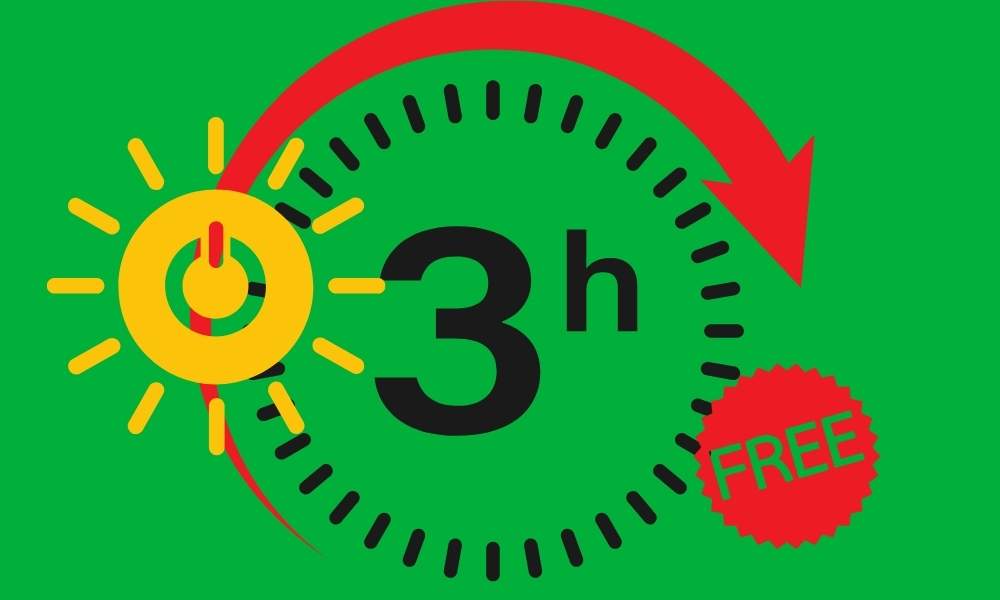
AGL’s recent “Three for Free” plan promises something eye-catching: three hours of free electricity every day between 10am and 1pm. It is designed to stand out in a competitive retail market and taps into a bigger shift in how Aussies are charged for energy. For homeowners, the key question is simple: does it really save money, or is it just clever marketing?
Why midday is now the cheapest time to use power
Australia’s energy market has been reshaped by the solar boom. Over 3.7 million households now have rooftop systems, and their combined output has transformed the supply-and-demand curve. Where power used to be most expensive in the middle of the day, it is now one of the cheapest times to consume. Wholesale prices during sunny hours often plummet, and at times even turn negative as the grid struggles to absorb excess solar generation.
Retailers like AGL are repackaging this phenomenon for households. By offering free electricity during a midday window, they encourage consumers to draw more power at times when supply is abundant and prices are suppressed. For customers without their own panels, it’s a way to benefit from the solar dividend.


The trade-offs hidden in the plan
While “free” electricity is the headline, the underlying tariff structure matters. Compared to AGL’s Smart Saver plan, the “Three for Free” option includes:
- A higher daily supply charge of 127.69 cents, compared to 108.03 cents.
- A higher usage charge outside the free window, at 47.73 cents per kilowatt hour versus 43.63 cents.
- The same solar feed-in tariff (FiT) of just 2 cents per kilowatt hour.
The plan therefore favours households that can deliberately shift a large share of their electricity use into the free hours. For those who cannot, the higher fixed and variable charges risk outweighing the benefit.
Scenarios where it pays off
- Work-from-home households: Running washing machines, dishwashers, or home offices during the free window becomes straightforward. A household consuming 5 kWh in the free period could save around $2.40 per day, adding up to more than $850 a year.
- Electric vehicle owners: Plugging in an EV at 10am each day could save thousands of kilowatt hours annually. Even partial charging over three hours makes the plan attractive.
- Families without solar: Renters or apartment residents with no rooftop system can finally access a form of cheap daytime power.
- Households with small solar systems: On cloudy days or in winter when production dips, the free period can cover demand without drawing costly grid power.
When it doesn’t add up
The plan is less effective for households that cannot adjust routines. Evening-heavy usage (cooking dinner, heating or cooling in the later afternoon, or running laundry at night) means the higher tariffs apply. For solar households with large systems, much of their midday demand is already free through self-consumption. Exporting power to the grid during the free hours also delivers little return, given the 2-cent feed-in tariff. In these cases, the “Three for Free” plan may add cost rather than reduce it.
The behavioural challenge
Success depends on behaviour. Households need to actively move usage into the midday window: setting appliance timers, delaying vacuuming, scheduling pool pumps, or programming EV chargers. For some, this kind of energy “time-shifting” is a small adjustment. For others, especially those out of the house during the day, it may be impractical.
The plan reflects a broader push to align consumer habits with grid realities. As solar penetration rises, energy retailers want demand to shift toward midday to soak up excess generation and ease evening peaks. Households that embrace this shift can benefit, but it demands conscious effort.

A signal of changing tariffs
AGL’s plan is not an isolated gimmick. It marks a turning point in tariff design. For decades, off-peak rates meant cheap overnight electricity, suited to hot water systems and late-night appliances. Today, the cheapest period is increasingly the middle of the day. Tariffs are evolving to reflect this new dynamic.
Other retailers may follow AGL’s lead with similar offers, potentially broadening the choice for consumers. Households should expect more innovative plans that link prices directly to wholesale markets, rooftop solar generation, and battery integration.
The role of community energy
The “Three for Free” plan also sits alongside AGL’s wider Community Power initiatives, including community batteries in SA. These allow households without panels to benefit from cheaper stored solar energy, priced at around 25% below the default market offer. Together with AGL’s acquisition of Tesla’s Virtual Power Plant, these moves suggest retailers are preparing for a future where energy is shared, stored, and traded at the community level.
For homeowners, this raises a bigger consideration: the best way to save may not always be installing panels on your own roof. Shared infrastructure, batteries, and smart tariffs could deliver similar or better results, especially for those locked out of solar ownership.
Why reviewing your plan matters
The Australian Competition and Consumer Commission recently warned that four out of five households are paying too much for electricity simply because they remain on outdated plans. On average, the penalty for inaction is $238 a year. Against this backdrop, AGL’s new offer is another reminder that staying informed and switching regularly is one of the most active ways to save.
AGL’s “Three for Free” plan offers genuine value in the right circumstances, but it is far from universal. Households with flexible routines, high daytime use, or electric vehicles can make it work to their advantage. Others may find the higher base charges too steep. What it does illustrate is the direction of Australia’s energy market: daytime is the new off-peak, solar is reshaping every tariff, and the best deals now reward behaviour as much as hardware.
For Australian homeowners, the lesson is clear. Understand your household’s energy profile, compare plans regularly, and don’t assume that the word “free” means automatic savings. In today’s market, the smartest savings come from aligning your habits with the grid’s new reality.
Energy Matters has been in the solar industry since 2005 and has helped over 40,000 Australian households in their journey to energy independence.
Complete our quick Solar Quote Quiz to receive up to 3 FREE solar quotes from trusted local installers – it’ll only take you a few minutes and is completely obligation-free.