




The Virtual Power Plant in Australia is becoming a popular topic as more households install solar batteries and seek ways to reduce electricity costs. A Virtual Power Plant (VPP) enables homes with solar batteries to work together to support the grid while earning rewards.
But is joining a Virtual Power Plant Australia program worth it? If you own a home battery or are considering one, here is what you need to know before you sign up.
Quick answer: A virtual power plant (VPP) in Australia is a network of home solar batteries linked by cloud software that the grid can draw on during peak demand. In return, participants earn higher export payments, bill credits, and — in some states — battery rebates. If you already own a compatible solar battery, joining a VPP can turn idle storage into ongoing income with minimal effort.
Key takeaways
- A VPP coordinates thousands of home solar batteries through smart software so they act as one large power station supporting the grid.
- VPP members typically earn higher export rates than standard feed-in tariffs, plus bill credits and upfront battery discounts.
- South Australia’s old Home Battery Scheme is now closed; current 2026 support flows through the Retailer Energy Productivity Scheme and Western Australia’s VPP-linked Residential Battery Scheme.
- Australia passed 400,000 home battery installations by mid-May 2026 — more than 11.4 GWh of usable capacity available for VPP aggregation.
- Trade-offs include shared battery control, internet dependency, contract lock-in, and variable earnings, so always read the fine print.
- A VPP is most worthwhile if you own (or plan to buy) a VPP-ready battery, have a smart meter, and want your storage to earn while it sits idle.
What is a Virtual Power Plant (VPP)?
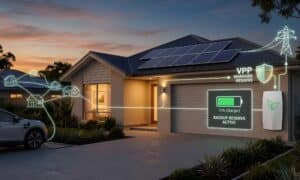
A virtual power plant in Australia is a cloud-connected network of distributed energy resources — mainly home solar panels and batteries — that are coordinated to operate as a single, large-scale power station. A virtual power plant network in Australia is a digital ecosystem of distributed energy resources. It links hundreds of home solar panels and battery storage systems through smart cloud software. Instead of relying on one large, coal-fired power station, the energy market can draw clean power from everyday Australian homes.
When the electricity grid faces high stress, the central VPP software activates. It coordinates the connected home batteries to work together as a single, massive battery. This collective power is then discharged into the grid to keep the lights on in your local area.
You do not need to do any manual work once you sign up. The smart software manages everything in the background based on real-time data. Your home remains powered, and your excess energy goes where it is needed most.
VPPs are no longer a niche experiment. Across Australia, there were more than 400,000 battery installations as at mid-May 2026 (validated and pending), representing over 11.4 GWh of usable capacity — a vast pool of distributed storage that aggregators can call on. (Clean Energy Regulator) For deeper background, see our guide on understanding Virtual Power Plants (VPPs) in Australia.


How does a VPP work?
A VPP works by using software to monitor your solar battery in real time and automatically charge, discharge, or export energy based on grid needs — you earn rewards while the system runs hands-free. A Virtual Power Plant Australia system helps create a more flexible and reliable energy network. The process is simple.
Step 1: Solar panels generate electricity: During the day, your solar panels produce energy.
Step 2: Battery storage saves excess power: Unused electricity is stored in a home battery.
Use Energy Matters’ easy-to-use solar power and battery storage calculator to determine the size of your solar system with storage! Our solar calculator will generate performance information and potential savings.
We can send this information to 3 of our pre-vetted, trusted local installers in your area so they can provide obligation-free solar quotes and take the first step toward true energy independence!

Step 3: The VPP software connects thousands of batteries: Smart software links participating homes. It monitors your battery and decides when to charge from solar, discharge to your home, or export to the grid.
Step 4: Energy is shared when demand rises: The network can discharge energy into the grid during peak periods. When grid demand peaks, the operator exports energy from participant batteries — often during evening demand spikes or following storms.
Step 5: Participants receive benefits: You earn higher feed-in tariffs or credits in return for allowing the operator to use your battery. Households may receive:
- Lower electricity bills
- Payments for energy exports
- Upfront battery discounts
- Ongoing incentives
Batteries are now central to how the grid is priced. In Q1 2026, combined battery charging and discharging accounted for 32% of price-setting dispatch intervals across the National Electricity Market, making batteries the most frequent price-setting technology during the quarter (AEMO). That shift is exactly why aggregators are paying households to make their stored energy available.
VPP vs Standard Feed-in Tariff: What’s the difference?
The key difference is that a feed-in tariff only pays for surplus solar exported in real time, while a VPP can dispatch stored battery energy on demand and usually pays premium rates during peak periods. A standard feed-in tariff (FiT) pays you a flat rate for any solar energy you export to the grid. A VPP goes further — it can dispatch stored battery energy, not just surplus solar, and typically pays higher rates during peak-demand periods.
VPP vs Other options: Quick comparison
Compared with a standard solar owner or a grid-only household, a VPP member earns the most from exports and plays an active role supporting the grid, but trades some control of their battery to the operator.
| Feature | VPP Member | Standard Solar Owner | Grid-Only Household |
| Export earnings | Higher (VPP rates) | Standard FiT | None |
| Backup power | Possible (if battery) | Battery only | None |
| Control of the battery | Shared with the operator | Full control | N/A |
| Bill savings | High | Moderate | Low |
| Setup cost | Varies by program | Battery cost | Nil |
| Wait time to join | Program-dependent | Immediate | N/A |
| Eligible hardware | Approved list only | Any inverter | N/A |
| Grid support role | Active participant | Passive exporter | Consumer |
Benefits of joining a Virtual Power Plant Australia program
The main benefits of joining a VPP in Australia are higher export earnings, lower bills through smart battery optimisation, blackout backup, grid contribution, and access to state battery incentives. VPPs are not just good for the grid. They can deliver real financial and practical benefits for participants.
- Higher export earnings: VPP peak rates often beat standard feed-in tariffs by a significant margin.
- Lower electricity bills: Smart software optimises when your battery charges and discharges, reducing the amount you draw from the grid during expensive peak times.
- Blackout resilience: Many VPP batteries also offer home backup, keeping your lights on when the street goes dark.
- Grid contribution: You directly help Australia meet its renewable energy targets by reducing reliance on fossil fuel peaker plants.
- Government incentives: Some state programs subsidise the cost of the battery if you agree to join a VPP — significantly lowering the upfront cost. South Australia’s Home Battery Scheme is now closed to new applications. The current South Australian replacement is delivered via the Retailer Energy Productivity Scheme (REPS): eligible concession card holder households can receive up to $2,050 cashback when connecting their battery to an approved virtual power plant (Seniors Card SA).
State-level momentum shows just how mainstream VPP-linked storage has become. South Australia now has more than 30,000 home batteries installed across the state (Energy & Mining SA), and the state’s emPowering SA program is delivering 18 community batteries designed to directly benefit more than 10,000 nominated households with a retail electricity rate 25% below the Default Market Offer, with a typical annual saving of up to $575 per household and around $60 million of value over the life of the batteries (Energy & Mining SA).
In Western Australia, VPP participation is built directly into the rebate. Western Australia’s Residential Battery Scheme requires participation in a virtual power plant to access support, with rebates up to $1,300 for Synergy customers and up to $3,800 for Horizon Power customers, alongside no-interest loans up to $10,000 for eligible households (WA Government). As of 19 May 2026, more than 20,000 WA families had installed home batteries through the scheme, creating more than 300 MWh of storage, and storage contributed a record 37.2% of peak demand on the WA grid on 9 May 2026 (State of Energy WA).
Check the state government energy rebate pages to see what is currently available near you.
Things to consider before you join a VPP
Before joining a VPP, weigh up reduced battery control, variable payments, internet dependency, possible contract lock-in, and whether your battery is on the provider’s approved hardware list. VPPs work well for most households, but they are not a perfect fit for everyone. The right program for you depends on your energy usage, battery size, and the level of control you want to retain. A good solar installer can help you compare the options.
Here are a few more things to consider before you commit.
- Reduced battery control: The operator can dispatch your stored energy without you having to do anything, including when you might want it for overnight use. Most programs let you set a minimum reserve, but check the fine print.
- Payments can vary: VPP earnings depend on how often the grid actually needs your battery. In low-demand periods, you may earn less than expected.
- Internet dependency: Your system needs a reliable internet connection for the operator’s software to manage your battery remotely.
- Contract lock-in: Some programs require you to stay with a specific retailer for a set period. Switching could mean losing benefits or paying exit fees.
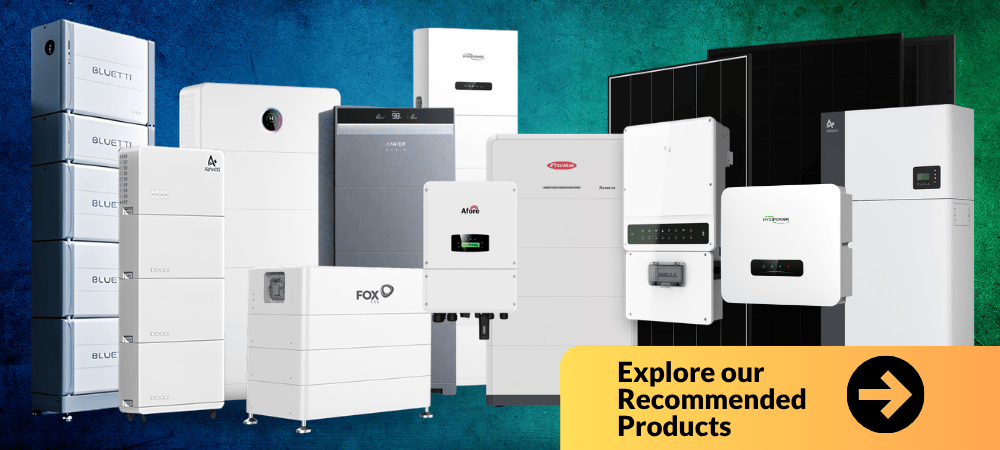
- Hardware compatibility: Not all batteries are VPP-ready. If you are buying a battery to join a VPP, confirm compatibility before purchasing. Check our page for our recommended VPP-ready battery products.
It also pays to be vigilant about who you sign with. Read our guide on how to spot a trustworthy virtual power plant deal, and confirm your hardware qualifies with our overview of VPP-ready batteries and smart inverters in 2026.

How to choose the best VPP program
To choose the best VPP program in Australia, compare the exit policy, your control over backup reserves, whether you must switch retailers, and whether your battery brand is approved. To find the right virtual power plant Australia network for your home, ask yourself these essential questions:
- What is the exit policy? Avoid programs with long lock-in periods or expensive exit fees if you value flexibility.
- Can I set my backup reserve? Ensure the provider allows you to reserve enough power for unexpected blackouts.
- Do I have to change my electricity retailer? Some VPPs require you to switch your entire electricity plan to them.
- Is my battery brand approved? Check the provider’s approved hardware list before committing to a contract.
VPP enrolment is climbing fast, and the long-term outlook is strong. AEMO’s 2025 Distributed PV and Batteries/VPP Forecast Report assumes residential and commercial battery participation in VPPs across the NEM, and WEM rises from about 20% in 2025-26 to roughly 50% in its Step Change scenario, and about 70% in its Accelerated Transition scenario, by 2049-50 onward (AEMO). Growth in the underlying battery fleet is rapid too: in Q1 2026 alone, more than 82,000 validated batteries were installed under the Cheaper Home Batteries Program, adding over 2.5 GWh of storage, with validated program totals reaching 284,000 batteries and 7.4 GWh by the end of the quarter (Clean Energy Regulator).
Popular VPP Providers in Australia
Australia has a growing list of VPP providers, each with different battery requirements, payment models, and state availability — so comparing programs side by side is essential before you commit. Program features vary, so comparing options is important. Several companies offer Virtual Power Plant programs in Australia. Examples include:
- Origin Energy
- GloBird
- AGL
- EnergyAustralia
- Amber Electric
- Simply Energy
- Tesla Energy Plan
Visit our Virtual Power Plant (VPP) offers in Australia page for more information, and compare the latest deals in our roundup of the best Virtual Power Plant offers in Australia for 2026.
Should you join a VPP in Australia?
You should join a VPP in Australia if you already own — or plan to buy — a compatible solar battery, have a smart meter and stable internet, and want your storage to generate ongoing income instead of sitting idle. If you already own a solar battery or plan to get one, joining a virtual power plant network in Australia is highly recommended. It turns a passive storage device into a real money-maker.
However, you must ensure that your household meets the required criteria. Your battery must be compatible with the specific provider’s software. You also need a stable internet connection and a modern smart meter installed at your property.
If you love maximum predictability, choose a provider that offers fixed monthly bill credits. If you prefer higher risk and higher rewards, a wholesale market-linked plan might suit you better.
Want to see how households are already earning from their batteries? Read our explainer on how your home can be part of the grid and how VPPs are transforming energy consumption across Australia.

Thinking about installing solar panels or battery storage?
Virtual Power Plant Australia programs are changing how households interact with the electricity grid. They offer the potential for lower bills, cleaner energy, and improved grid stability.
Energy Matters can help you compare trusted installers and find the right solution for your home. Get free solar quotes from Energy Matters today and discover how solar batteries and VPPs can work for you.
Frequently Asked Questions (FAQs)
What is a virtual power plant in Australia?
A virtual power plant in Australia is a network of home solar batteries connected by cloud software so they can act as one large power station. During peak demand, the operator dispatches stored energy from participating homes to support the grid, and households are rewarded with higher export payments and bill credits.
How much can I earn from a VPP in Australia?
Earnings vary by provider, battery size, and how often the grid calls on your storage. VPPs typically pay premium peak-period rates well above standard feed-in tariffs, plus possible bill credits or upfront incentives. In low-demand periods you may earn less, so it is worth comparing fixed-credit and market-linked plans.
Is the South Australia Home Battery Scheme still available in 2026?
No. South Australia’s Home Battery Scheme is closed and no longer accepting new applications. A current replacement is delivered through the Retailer Energy Productivity Scheme, where eligible concession card holder households can receive up to $2,050 cashback when connecting their battery to an approved virtual power plant.
Which batteries are compatible with Australian VPPs?
Each VPP publishes an approved hardware list, so compatibility depends on the provider. Generally, you need a VPP-ready battery paired with a compatible smart inverter and a modern smart meter. Always confirm your specific model is approved before buying or signing a contract.
Do I need to switch electricity retailers to join a VPP?
Sometimes. Many VPPs require you to move to a specific retailer or energy plan, while others can layer over your existing arrangement. Check whether switching is mandatory and whether there are lock-in periods or exit fees before you commit.
Will joining a VPP drain my battery during a blackout?
Most VPPs let you set a minimum reserve so the operator cannot discharge below a level you choose, preserving backup power. Many VPP-ready batteries also provide blackout protection that keeps essential circuits running when the grid goes down. Confirm the reserve settings in the program’s terms.
How big are VPPs in Australia right now?
Australia had passed more than 400,000 home battery installations by mid-May 2026 — over 11.4 GWh of usable capacity — and AEMO forecasts VPP participation rising from around 20% of batteries in 2025-26 toward roughly 50–70% by mid-century. That makes the household battery fleet an increasingly important grid resource.
Is joining a VPP in Australia worth it?
For most households that already own or plan to buy a compatible battery, a VPP is worth it because it turns idle storage into ongoing income with little effort. The main trade-offs are shared battery control, internet dependency, and possible contract lock-in — so compare programs carefully against your usage and flexibility needs.