






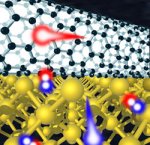
Recent research out of Yale University could usher in a new generation of efficient hybrid carbon/silicon solar cells.
In recent findings, published in the journal Energy and Environmental Science and Nano Letters, engineers from Yale discovered that combining traditional crystalline silicon solar materials with carbon nanotube technology resulted in higher energy conversion efficiency than previously thought possible.
“This is striking, as it suggests that the superior photovoltaic properties of single-crystalline silicon can be realized by a simple, low-temperature process,” said Xiaokai Li, a doctoral student and a lead author on both papers.
“The secret lies in the arrangement and assembly of these carbon nanotube thin films.”
Carbon nanotubes are used in organic solar cell technology and increasingly, in energy storage systems such a lithium ion batteries. Cells made from organic materials are nothing new; but while they are cheap to make, their efficiency to this point has been much less than silicon.
Single-crystalline silicon is the key component used in monocrystalline solar panels due to its excellent optical and energy conversion characteristics. However, producing the material can be cost-prohibitive as high temperatures are needed to form silicon wafers.
The team developed a method – superacid sliding – of layering thin films made from carbon nanotubes onto a single-crystalline silicon base creating a hybrid solar cell architecture.
“Our approach bridges the cost-effectiveness and excellent electrical and optical properties of novel nanomaterials with well-established, high efficiency silicon solar cell technologies,” said André D. Taylor, assistant professor of chemical and environmental engineering at Yale.
Another lead author of the papers, Yeonwoong (Eric) Jung, believes the development could also lead to high efficiency all-carbon solar cells.
Support for the research was provided by the National Science Foundation, NASA, the U.S. Department of Energy, and the Yale Institute for Nanoscience and Quantum Engineering.