





Australia’s Electric Vehicle Council is busting the top 10 myths about electric vehicles in a new fact sheet.
The Council launched in May 2017 with a roadmap to accelerate Australia’s uptake of electric vehicles (EV).
While EV uptake on a mass scale is possible, myths around EVs persist, muddying the waters for consumers, the council says.
Myths tackled by the Council include EVs not having the necessary range needed by a vehicle.
“The average Australian household completes about one hour of continuous driving – or 38km – per day,” the Council says.
“EV driving ranges can easily meet this, assuming drivers recharge vehicles overnight.”
Do electric vehicles take too long to charge?
The complaint that EVs take too long to charge is also refuted. The Council says most EVs take between six to ten hours to charge with residential AC. At DC fast charging stations EVs can be charged to 80 per cent in around 20 minutes.
While the Council concedes that EVs are more expensive than petrol cars, it says this is changing. “The main driver for this cost difference is the cost of batteries,” it says. “However, this fell by an average of 14 per cent per year between 2007 and 2014. Bloomberg predicts that by 2025, the total cost of EV ownership will fall below that of conventional fuel vehicles.”
A look at operating costs shows a significant saving, says the Council. An average EV costs around $4.50 in electricity charges to travel 100km. This is compared to $16.65 for the average petrol car in Australia.
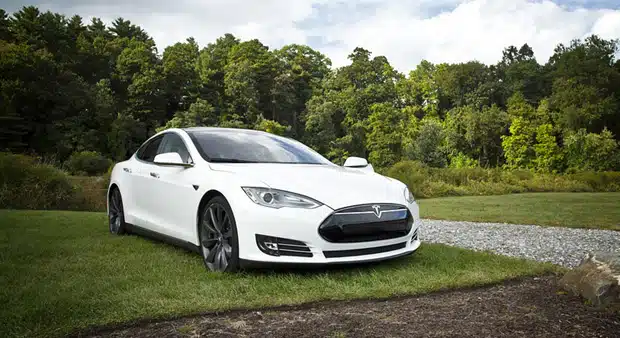
Furthermore, in terms of performance, the Council says EVs are more than a match for petrol cars. “The Tesla Model S P100D the fastest accelerating production car ever manufactured, able to reach 100 km per hour in just 2.6 seconds,” it says. “In addition, it is also the longest range EV available.”
Electric vehicles will help reduce CO2 emissions
Environmentally, EVs are a winner, says the Council: “If Australia were to shift to 100 per cent EVs, operating on renewable electricity, this would eliminate 6 per cent of Australia’s greenhouse gases.”
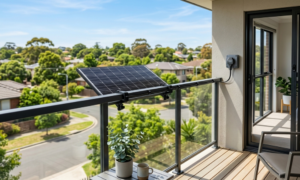
In addition, rooftop solar panels now contribute to the generation of electricity for charging EVs. Furthermore, home battery storage is also growing in Australia, providing further options for clean energy charging.
The concern about grid overload is also met in the Council’s list. Most concerns around the impact of EVs on Australia’s electricity grid are based on worries the grid will overload during peak demand. These are times such as after work and on weekends when electricity demand rises. In reply, the Council says EVs can be charged at home during off-peak periods (e.g. overnight).