




Australia’s shifting tide against fossil fuels, and the uptake of electrification across industry and the general population, has seen just as many challenges as there are positive steps towards net zero. Our new-found love for electric vehicles has revealed the many weaknesses of our aging infrastructure. The weaknesses highlight the need for renewables, and our existing network, to operate differently. Australia’s centralised electricity networks dissuade many would-be solar PV consumers.
Offloading excess electricity generated to the grid is no longer appealing to many with the steep reduction of the feed-in tariffs. In addition, many homes have their export capacity limited due to the limitations of their local network, with some having no ability to export at all. Couple this all with the knowledge that, for most, the ability to control how your excess energy is utilised is near non-existent, and one can understand why so many are frustrated with Australia’s lack of forward-thinking when we are in the midst of an energy and climate crisis.
In steps Powerledger.
Blockchain: The ability to control and monetise your electricity
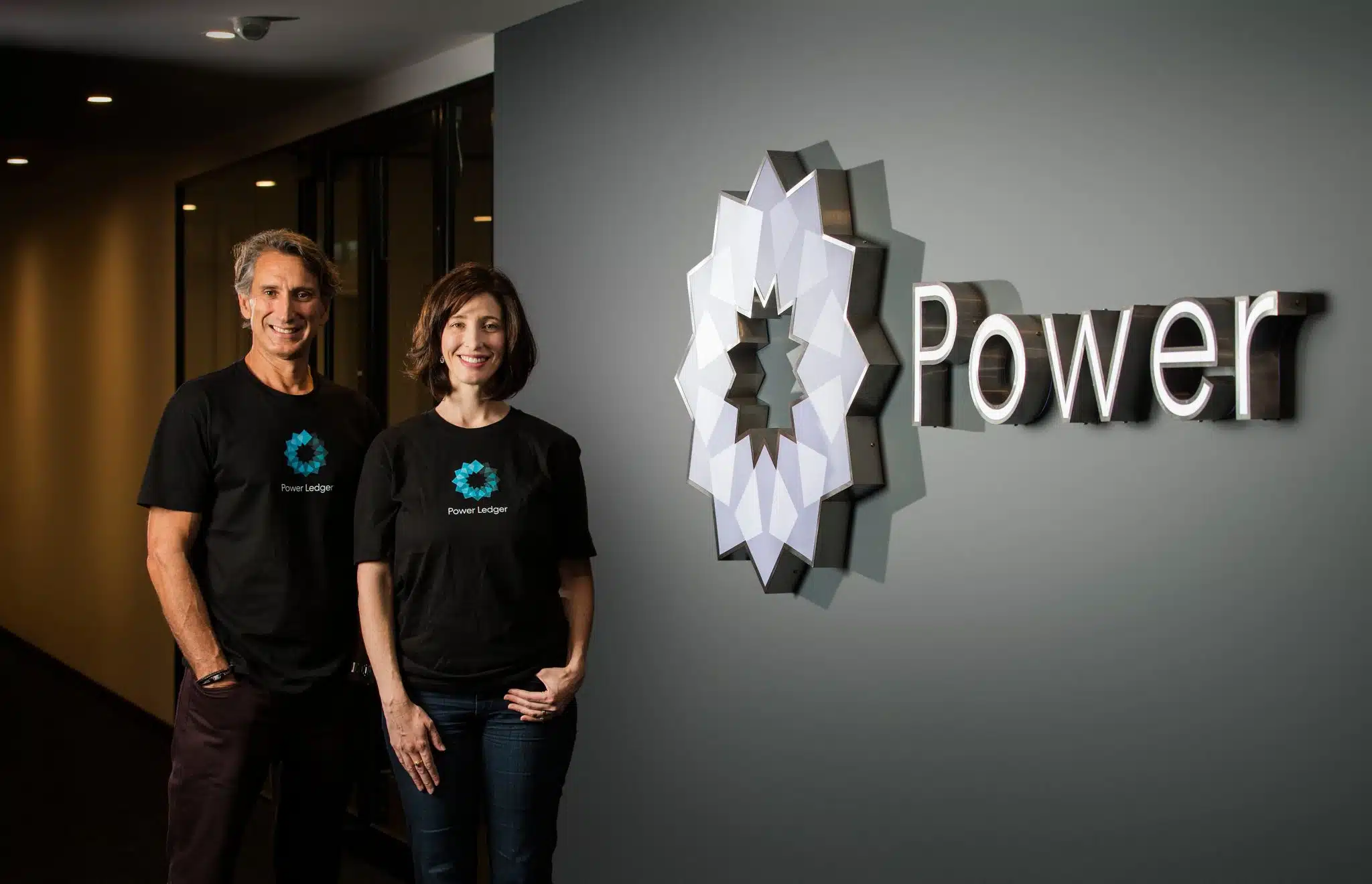
Once a concept that was mostly used to track cryptocurrency transactions, blockchain has now been utilised by Powerledger to allow Australian citizens and businesses to take control over their electricity usage and export. Blockchain is a ledger that records transactions in ‘blocks’ that cannot be retroactively changed without altering all the blocks that are part of its ‘chain’. This allows for user trust and ease of tracking.
Powerledger, developed in 2016 by Australian-based members, aims to decentralise the Australian, and global, electricity market. They utilise blockchain to allow peer-to-peer (P2P) users to control where they source their electricity, sell their excess electricity, trade with neighbours, and do so for only a small fee and all with or without a retailer. This function is available via Powerledger’s xGrid. Unlike a Virtual Power Plant, the users will have control over when their energy can be accessed, whether excess or from battery storage, and for how much.
uGrid, empowering microgrids and networks
Let’s say you live in an apartment building with no direct roof space for you to individually install solar on. You and your neighbours collectively install solar on the roof, but you have no way to effectively track apartment usage and calculate credit. uGrid provides a platform for apartment dwellers to trade with each other and accurately calculate usage and exports to fairly compensate residents. This is all done with the use of blockchain and Powerledger’s platform. This is just one example of how the power of electricity control can be handed back to the individual and the community. This application can also be utilised by businesses and industry.
Changing needs call for a changed approach
Dr Jemma Green, Executive Chairman and Co-founder of Powerledger, and our recent Road to Zero guest, recognised our need for a different way to approach energy and sustainability early in her career. Dr Green has many titles and achievements to her name which has seen her receive the EY Fintech Entrepreneur of the Year award and pave the way for others with her many talks on business and leadership. Her doctorate in electricity market disruption helped to bring Powerledger to life, which won the Sir Richard Branson’s Extreme Tech Challenge in 2018.
Dr Green’s vision for democratised power distribution has seen Powerledger undertake projects in the US, Europe, Thailand, and Japan.