





A new material uses sunlight as a catalyst to break down the molecular structure of synthetic dye pollutants in water.
Researchers at Swansea University in Wales developed the composite material, which is made of tantalum nitride and tungsten oxide.
The two chemicals form a dye-attracting grid, which degrades the dye into smaller, harmless molecules. Sunlight drives the process, which is known as photocatalytic degradation.
Dye pollutants are released at a rate of nearly 300,000 tonnes a year into the world’s water system.
The findings were published in the journal Nature.
Working at a nano level to remove dye pollutants
The composite material is made of nano wires of tungsten oxide laid on a tantalum nitride surface.
Both tantalum nitride and tungsten oxide molecules are less than 40 billionths of a metre in diameter. The composite provides a huge surface area for dye capture.
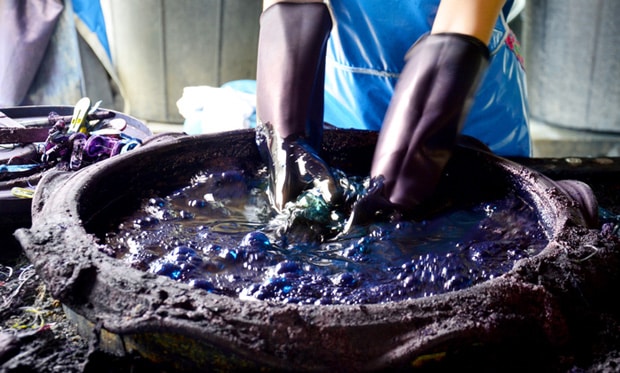
Until now, ultra-violet light was needed to degrade dye. However, the latest design using the new composite material works with ordinary sunlight.
The new material can remove pollutants at a far superior rate due to the broader spectrum of light it can use to decompose the dye.
Tantalum nitride is red in colour due to its ability to absorb almost the entire spectrum of visible light. It therefore extracts a high amount of energy from sunlight to power the dye degradation processes.
However, due to the exchange of electrons between the two materials, dye is broken down by the composite at around double the rate achieved by tantalum nitride on its own.
Up-scaling process for real world applications
Once the dye is extracted the material can be filtered by clean water then reused.
Real world applications may soon become apparent, according to Dr Daniel Jones from the Energy Safety Research centre at Swansea University.
Dr Jones said the capabilities of the composite have been proven, and improvements will be made. The next step is to scale up the process for use in real world applications.
“We’re also exploring its viability in other areas, such as the photocatalysed splitting of water to generate hydrogen,” he said.