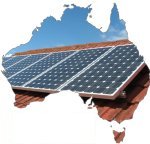




Going Solar: Renewing Australia’s Electricity Options
Without stable policies to support renewables, Australian households are at risk of future electricity bill shocks of up to $250 a year on average; along with a threat of supply interruptions.
While it may have been less than $200 million last year, the worldwide market for PV storage is forecast to reach $19 billion in 2017.
A novel concept from MIT engineers could deliver abundant wind power to national grids by enabling offshore floating wind turbines to store energy using giant cement spheres on the sea floor.
U.S. researchers believe a breakthrough in battery technology will see more utility-scale solar and wind energy powering national grids.
That solar is reducing the cost of wholesale electricity is not new news in itself – but now a figure has been put on the savings.
The Netherland’s Wageningen University is leading a project to install 4,000 solar powered mosquito traps on the Kenyan island of Rusinga.
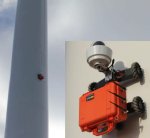
Wind turbine inspection has been made a little safer, faster and more thorough with the advent of purpose built robotic vehicles.
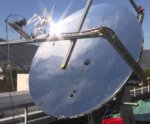
Researchers are developing a PV system that concentrates solar radiation 2,000 times and converts 80 percent of the incoming radiation into useful energy.
Solar Frontier CIS solar panels will be powering an 11.6 MW solar power station at Kansai International Airport, Japan.
Solar provider Energy Matters has made it possible for thousands more Australian households to slash their power bills with the company’s zero dollar up-front programs.