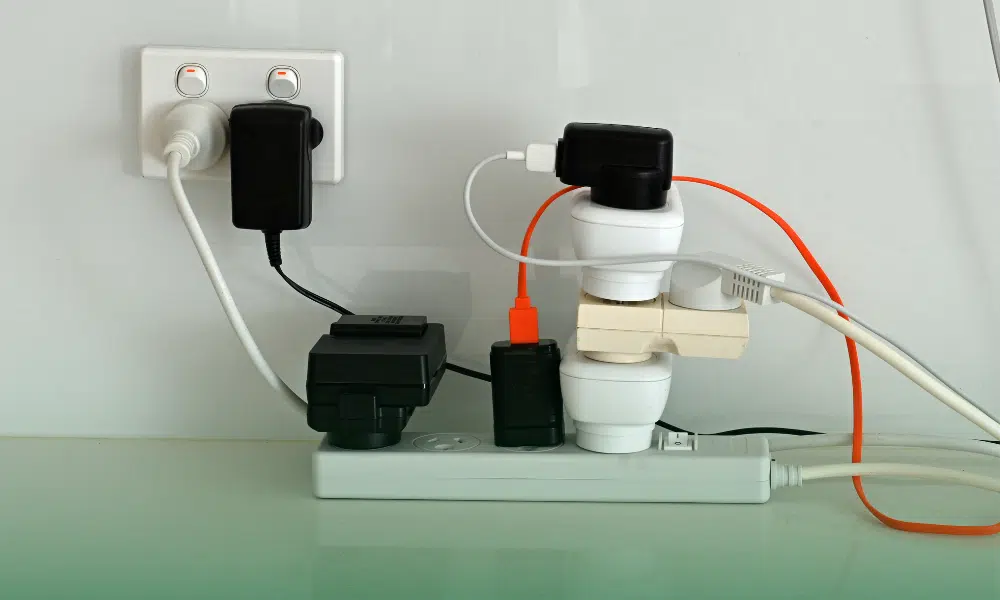

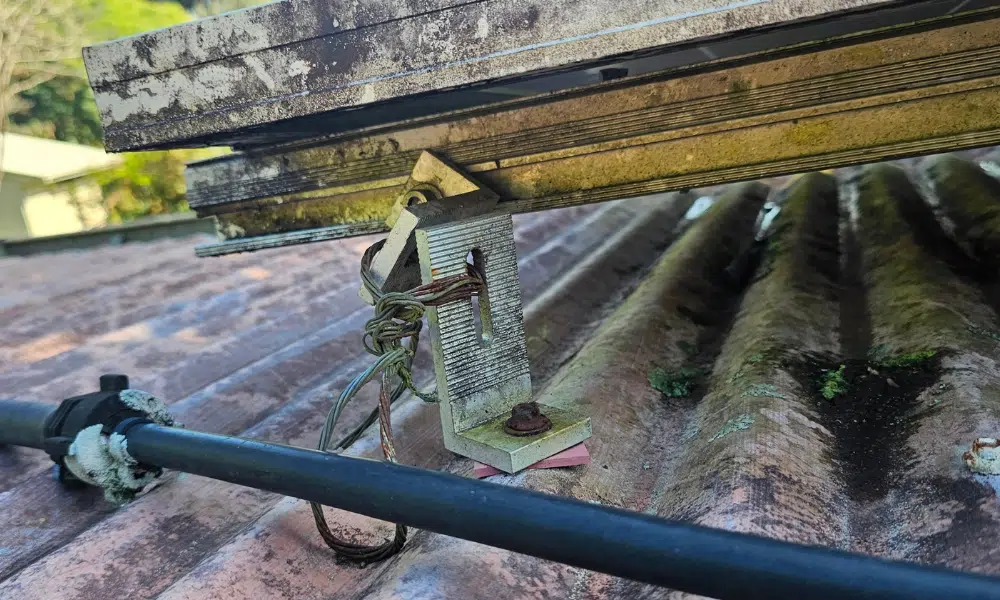
Post-installation inspections should be mandatory. Source: Facebook, Crap Solar
This should be a non-issue. Electrical safety is fundamental for every Australian home and business, particularly as solar panels and batteries become standard fixtures rather than niche upgrades. While licensing and certifications provide a level of assurance, they are not enough on their own. Without mandatory, Australia-wide post-installation inspections, many households are unknowingly left with systems that pose genuine safety risks.
Solar and battery systems are not just about energy savings. They involve high DC voltages, complex wiring, and, in the case of batteries, significant fire and thermal risk if installed incorrectly. Most homeowners have no practical way to identify poor workmanship once a system is switched on. They assume that if it is operating, it must be safe. That assumption is where the current regulatory gap becomes dangerous.
Where Victoria gets it right
In the land of red tape, Victoria does get some things right. The state is currently the only jurisdiction in Australia that legally mandates independent post-installation electrical inspections for solar and battery systems.
Victoria’s approach is grounded in the Electrical Safety General Regulations 20191, under the Electricity Safety Act 1998. These regulations require prescribed electrical work, including solar PV and battery installations, to be inspected by a Licensed Electrical Inspector. Crucially, this inspection occurs after installation and before the system can remain energised on an ongoing basis.
The regulations came into force in late 2019, embedding independent inspection into Victoria’s electrical safety framework. This means installers cannot simply sign off on their own work. A qualified, independent inspector must verify that the system has been installed safely and in accordance with regulations.
That extra layer of oversight matters. It removes ambiguity, reduces risk, and ensures accountability across the industry.


What the data shows in Victoria
Victoria’s safety framework does not stop at inspections. Solar Victoria also conducts ongoing audits2 through the Solar Homes Program, targeting around 2.5 per cent of installations for additional review. These audits assess electrical safety, system design, documentation, and overall compliance.
The results are telling. A Solar Victoria report released in 2021 found a 67 per cent reduction in serious safety concerns since the program began in 20183. That improvement coincided with stronger inspection requirements, tighter compliance checks, and clearer enforcement pathways.
More recent indicators continue to support this trend. Energy Safe Victoria’s 2024–254 reporting recorded no electricity-related fatalities across the state, alongside a significant reduction in serious energy-related injuries year on year. The regulator also increased its inspection activity across renewable energy installations and strengthened enforcement powers, allowing faster intervention where unsafe practices were identified.
While no system is perfect, the direction of travel is clear. Independent inspections and active oversight lead to safer outcomes.
How the rest of Australia compares
Outside Victoria, the picture looks very different. Most states rely primarily on installer licensing and certificates of compliance, with independent inspections typically triggered by complaints, audits, or targeted risk programs rather than being universally required.
At a national level, the Clean Energy Regulator conducts inspection sampling under the Small-scale Renewable Energy Scheme. However, this program only reviews a small proportion of installations each year. It is designed as a safety net, not a comprehensive inspection regime.
Recent national inspection data show that close to one in five inspected systems had substandard issues. While not all of these issues were immediately dangerous, they failed to meet required quality or safety standards. In jurisdictions without mandatory inspections, many similar issues are likely never identified.
Victoria’s model adds a compulsory inspection layer on top of national sampling. That difference is significant, both in terms of consumer protection and overall system safety.

Why mandatory inspections make sense
Mandatory post-installation inspections create accountability across the entire supply chain. They reduce pressure on installers to self-certify, protect reputable businesses from being undercut by unsafe operators, and give homeowners confidence that their system has been independently checked.
From a safety perspective, inspections catch issues early, before faults escalate into failures, fires, or expensive remediation. From a policy perspective, they establish a consistent baseline for quality and compliance.
Solar and battery uptake is accelerating across Australia. As systems become larger and more complex, the consequences of poor installation increase. Relying on partial sampling and paperwork alone is no longer enough.
A simple national opportunity
Australia already has the regulatory frameworks, licensing structures, and skilled inspectors required to implement mandatory post-installation inspections nationwide. What is missing is consistency.
Victoria has shown that mandatory inspections, supported by audits and enforcement, can lift safety standards and drive measurable improvement. Electrical safety should not depend on your postcode.
If solar and batteries are to play a central role in Australia’s energy transition, safety must be treated as non-negotiable. A nationally mandated inspection framework would be a practical, proven step in the right direction.
At Energy Matters, safety matters – we’ve pre-vetted a nationwide network of installers ready to provide you with no-obligation and tailored quotes. Get FREE quotes for solar, batteries, heat pumps, and much more.
- Electrical Safety (General) Regulations 2019, Victorian Legislation, https://www.legislation.vic.gov.au/in-force/statutory-rules/electricity-safety-general-regulations-2019/002 ↩︎
- Audits, Solar Victoria, https://www.solar.vic.gov.au/audits ↩︎
- Lifting safety standards across the solar industry, Solar Victoria, https://www.solar.vic.gov.au/lifting-safety-standards-across-solar-industry ↩︎
- Energy Safe Victoria reports a strong safety year amid renewable energy growth, Energy Safe Victoria, https://www.energysafe.vic.gov.au/media-centre/news/energy-safe-victoria-reports-strong-safety-year-amid-renewable-energy-growth ↩︎