





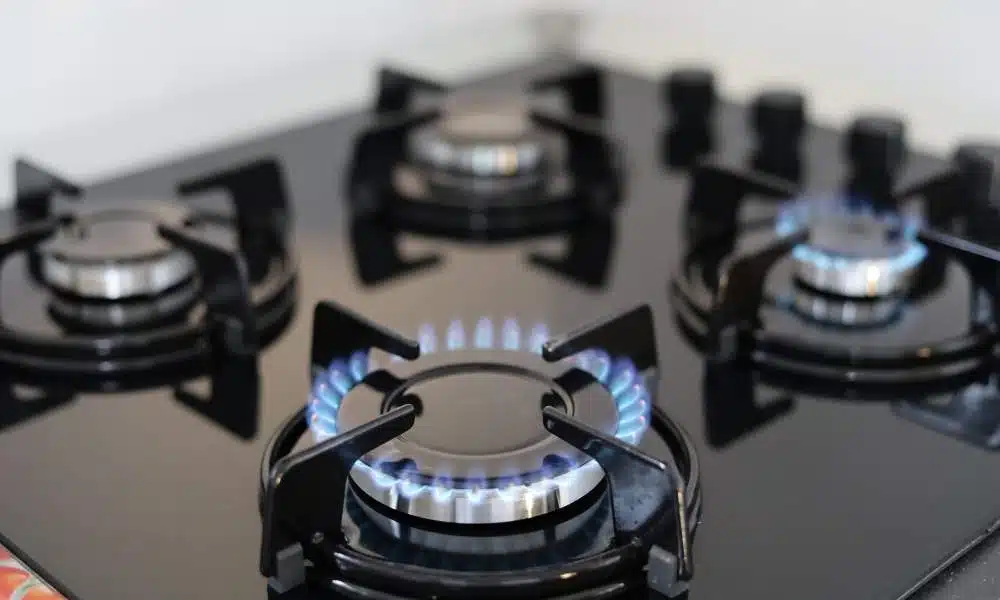
Most Canberra homeowners are aware that the ACT is moving away from gas. The ban on new gas connections came into effect in December 2023, while the 2045 gas-free target has been government policy for years.
What most homeowners have not worked through is what the policy actually means for their specific home, their next renovation decision, their gas bill over the next decade, or the value of their property when they eventually sell. This is where the fine print matters.
Why the network shuts down street by street
Understanding how the ACT’s gas phase-out will physically happen is the most important piece of context for any Canberra homeowners still connected to gas.
The ACT government and Evoenergy have confirmed that the most efficient and cost-effective method of decommissioning the gas network is bulk shutdown at the street, suburb, or district level. Individual household disconnections are not how this ends. At some point, a street’s gas main gets switched off, and everyone on it transitions together.
The engineering logic behind this is straightforward. Maintaining pressurised gas mains, conducting safety checks, and managing the infrastructure for a handful of remaining customers on a street where most households have already switched to electric is expensive, operationally complex, and a safety management challenge. Running kilometre after kilometre of high-pressure pipeline for a dwindling number of users is not a viable long-term position for any network operator.
As more Canberra households voluntarily electrify (driven by rising gas prices, new appliance purchases, or renovations), the cost of maintaining the remaining gas infrastructure is shared across a shrinking pool of customers. This pushed bills up for those who stay, which encourages more to leave, which raises costs further for the remainder.
Energeia’s modelling for the ACT government specifically identified this defection spiral as a central risk in the transition and a core reason why a structured, planned decommissioning approach is preferable to allowing it to play out organically.
Suburb-level maps and specific decommissioning timelines have not yet been published. The ACT government has committed to providing adequate notice before any street-level shutdown. What is already confirmed is the method, the direction, and the economic forces accelerating it.
What is already happening to your gas bill
Evoenergy submitted its revised five-year gas plan to the Australian Energy Regulator in January 2026, covering the period from 1 July 2026 to 2031. The plan proposes average annual increases to the network portion of gas bills of $22 per year across the regulatory period.
This increase is not the result of wholesale gas price movements or retail margin changes. It reflects the structural economics of managing a network in managed decline: fewer customers, same physical infrastructure, rising cost per connection.
For an ACT household still on gas, staying connected is already getting measurably more expensive. There is no structural reason for that trend to reverse. The network is not growing. The customer base is shrinking. The maths runs in one direction.
The property questions buyers and sellers should be asking
An ACT home with gas heating, a gas cooktop, or a gas hot water system carries appliances with a finite useful life on the current network. That is a fact worth understanding whether you are buying, selling, or staying put.
For buyers, the practical implication is that any gas-dependent ACT property comes with a known future cost: full electrification. Heat pump heating to replace ducted gas, induction cooktop to replace gas cooking, heat pump hot water to replace a gas storage system. These are not speculative future costs, but they are confirmed future requirements, with timing still to be determined by the decommissioning schedule. A buyer who factors that into their offer is making a more accurate assessment of the property’s value than one who does not.
For sellers, the calculation runs the other way. A home that has already been fully electrified removes that future cost from the buyer’s consideration entirely. In a market where buyers are increasingly aware of the ACT’s gas transition, and where building and energy assessments are becoming more detailed, a fully electrified home is a cleaner proposition.
For homeowners who are staying, the relevant question is not whether to electrify but when and in what order. Replacing a failed gas appliance with another gas unit is a decision that may require repeating within the decade. Replacing it with an electric alternative removes that question from the future.


The households that the transition plan is still working through
Not every ACT household can electrify on its own timeline or budget. Retirees on fixed incomes, renters who do not control appliance decisions, and low-income households who cannot fund upfront replacement costs are disproportionately likely to still be on gas when street-level decommissioning begins.
Energeia’s modelling for the ACT government explicitly flagged this as a central equity concern and recommended targeted incentives for low-income consumers as a core component of any transition plan. The ACT government has committed to ensuring no household is left without heating when a gas main is decommissioned.
The specific mechanisms (whether that means funded appliance replacements, low-interest loans, rental property obligations, or a combination) are still being developed. For households in this position, the most useful action right now is to engage with the ACT government’s existing electrification support programs and register interest in future assistance before the pressure of a decommissioning timeline makes the conversation urgent.
What to do with this information
The ACT’s gas transition is not a policy debate. It is active infrastructure planning with confirmed regulatory settings, rising network costs already flowing through to bills, and street-level decommissioning as the confirmed delivery mechanism. The specific timing for each suburb has not been published. The framework that makes that timing inevitable is already in place.
For most ACT homeowners, the practical response to this is not dramatic or urgent. It is a series of ordinary decisions made with better information than most homeowners currently have.
- If you are staying in your home: Treat the next appliance replacement as an electrification decision rather than a like-for-like swap. A gas hot water system nearing the end of its life is an opportunity to exit gas on your own schedule rather than the network’s.
- If you are renovating: The cost of electrifying heating, cooking, and hot water is most efficiently absorbed when walls are open, and trades are already on site. A renovation that retains gas appliances is one that will require a follow-up project within years rather than decades.
- If you are buying: Ask specifically about the gas appliances in any property, their age and condition, and factor the cost of full electrification into your assessment. That cost is real, and it belongs in your calculations regardless of when the specific decommissioning date for that street arrives.
- If you are selling: A fully electrified home removes a known future cost from the buyer’s side of the equation. Given where the ACT’s energy policy is heading, that is increasingly a meaningful distinction in the market.
The ACT’s gas phase-out is not a future event that may or may not affect you depending on how policy develops. It is confirmed policy with active planning, confirmed decommissioning methodology, and rising costs already underway for remaining gas customers.
Most homeowners have absorbed the headline without working through the specific implications for their home, their appliances, their gas bills, and their property’s position in the market.
The fine print is not alarming. It is practical. And acting on it ahead of a street-level deadline means doing so on your own terms rather than someone else’s schedule.
Energy Matters has been in the solar industry since 2005 and has helped over 40,000 Australian households in their journey to energy independence.
Complete our quick Solar Quote Quiz to receive up to 3 FREE solar quotes from trusted local installers – it’ll only take you a few minutes and is completely obligation-free.