




Gas ducted heating shaped a generation of Australian habits. Thermostat at 22-24 degrees, heating on at 5:30 pm, whole house running until bedtime. On a flat electricity tariff with cheap gas, those are reasonable habits because the costs were predictable and the system rewarded consistency.
Now, electricity is priced by the hour. Many households have switched from gas to electric heating. Most have not changed how they use it, and the difference is showing up on the bill.
The thermostat is set for a gas system
A gas ducted system delivers air at high temperatures through ceiling vents. To feel warm, the thermostat needed to be set higher, sometimes at 22 to 24 degrees, because the system was compensating for heat loss through a large duct network and distributing air through vents that pointed downward from the ceiling.
A thermostat set to 24 degrees on an electric system costs measurably more than one set to 20 degrees for the same hours of operation. According to Australian government guidance, every degree above 20 degrees in winter increases heating energy consumption by roughly 5-10%. The room does not need to be heated to 24 degrees to feel comfortable. It needed to be set that high with a gas system. Electric heating reaches a stable temperature at a lower setting.
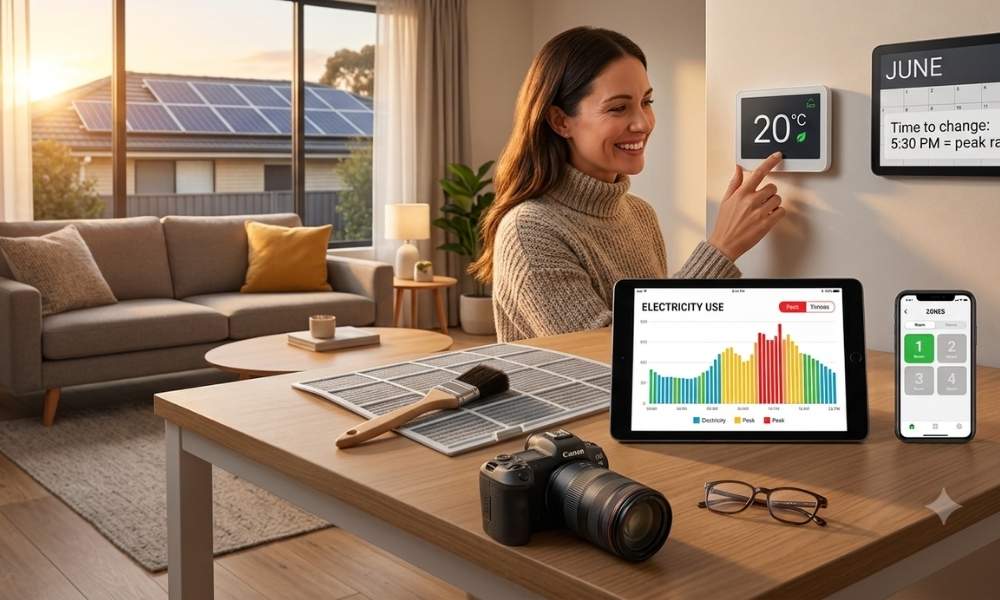
The fix takes only 10 seconds: drop the thermostat 2-4 degrees and give the system 20 minutes to stabilise before deciding whether it’s warm enough. For most homes, 20 degrees is comfortable once the air temperature is stable throughout the room.
The whole house is being heated for one room
Gas ducted heating ran the whole house from a single thermostat. Every room is conditioned simultaneously, whether occupied or not, because the system was not designed to do otherwise. Zoning existed but was rarely used because the cost of running the whole system was not dramatically different from running part of it on gas.
On electricity, that calculation changes. A reverse cycle ducted system heating 3 bedrooms, a study, and a hallway while everyone is in the living room paying to heat 5 empty spaces to reach one occupied one. Bad zoning and poor duct design can lose up to 30% of the energy paid for heating, with conditioned air circulating through ceiling voids and unoccupied rooms rather than where people actually are.
Most modern ducted reverse cycle systems have zone controls built into the wall panel or a companion app. Unfortunately, a lot of homeowners have never adjusted them from the default settings because after the installation and demo, that was it for (most) of them.
Here’s what you can do: Check the zone settings on your controller this week. Turn off the zones covering rooms that are empty for most of the evening. If you have a split system, all you need to do is close the doors of the unused rooms and run the split system only in the space being occupied.
You get a system that heats less air to reach the same comfort level for the people in the house.
The heating is being switched on at the worst time of day
Most households switch heating on when they arrive home. In winter, that is between 5-6pm. By that time, the solar system finished generating hours ago and peak electricity rates are in effect, The reverse cycle runs for several hours entirely on expensive grid power at 30-37 cents per kWh.
This is the habit that costs solar households the most, and it’s one of the most directly addressable without any new equipment.
A reverse cycle system set to run from 12:30pm to 2:30pm warms the house using midday solar generation. A well-built home holds that warmth for 2-3 hours after the system switches off. The household arrives home at 6pm into a pre-warmed space and many not need to touch the heating until 7pm or later, by which point the most expensive part of the peak pricing window is ending.
The system uses the same total energy to reach the same indoor temperature. The difference is entirely in when that energy is drawn and where it comes from. Pre-heating from solar costs a fraction of re-heating from the grid during peak pricing.
For those without solar, the same logic applies using off-peak or shoulder tariff windows. Check your tariff structure and identify the cheapest hours before the evening peak begins. Set the time to run the heating during those hours instead of after them.
The timer or scheduling function is built into most reverse-cycle systems. Setting it takes about 5 minutes the first time. After that, it runs automatically.




The filter has not been cleaned since last winter
The thing about reverse cycle air conditioners is that it doesn’t have an error code when you have a dirty filter. What makes it worse is that the system will look and feel like it’s running normally. What’s actually happening is that reduced airflow is forcing the system to work harder to move the same volume of air, increasing electricity consumption without any change in how the system looks or sounds.
Most manufacturers recommend cleaning filters every 2-3 months during periods of heavy use. Most households clean them once at the start or winter, while some… not at all. A filter inspection and cleaning takes about 5 minutes. On a system running daily through the coldest months, it’s the fastest maintenance task with a direct impact on the running cost.
Pull the filter out this week. If it’s visibly dusty or blocked, rinse it under a tap, let it dry, and replace it before running the system again.
The next step: Letting the solar system run the heating
In the past 5 years, most reverse cycle systems sold have Wi-Fi control built into them as a low-cost addition. That connectivity is what makes demand-response participation possible. Around 250,000 homes are already in programs where their AC’s energy use is managed remotely in exchange for bill credits.
For a home with solar, a Wi-Fi-enabled system can be connected to the home’s monitoring platform and set to start heating automatically when solar generation exceeds a set threshold. On a clear winter day it runs earlier and longer. On a cloudy day, it holds off or runs briefly. The thermostat is still in the room. The scheduling just responds to what the solar system is actually producing rather than a fixed timer.
For older systems without built-in Wi-Fi, smart thermostat retrofits add the same capability at relatively low cost. The IEEFA has recommended Australian governments subsidise these devices given the scale of the electricity demand they can move away from expensive peak hours.
4 things worth checking before the next power bill
- Drop the thermostat to 20 degrees if it’s currently higher and give the system time to stabilise before adjusting it back up. Most rooms feel comfortable at 20 degrees once the air temperature is stable.
- Check the zone settings on a ducted system and turn off zones covering empty rooms. If you have a split system, close the doors to rooms that are not being used.
- Set a pre-heat schedule for midday or early afternoon. For solar households, 12:30pm-2:30pm is the target window. For non-solar households, use the off-peak or shoulder window on your tariff.
- Clean the filter before running the system through the rest of winter.
None of these changes requires buying anything. They require using the heating system you already have in a way that suits 2026 electricity prices.
Energy Matters has been in the solar industry since 2005 and has helped over 40,000 Australian households in their journey to energy independence.
Complete our quick Solar Quote Quiz to receive up to 3 FREE solar quotes from trusted local installers – it’ll only take you a few minutes and is completely obligation-free.