


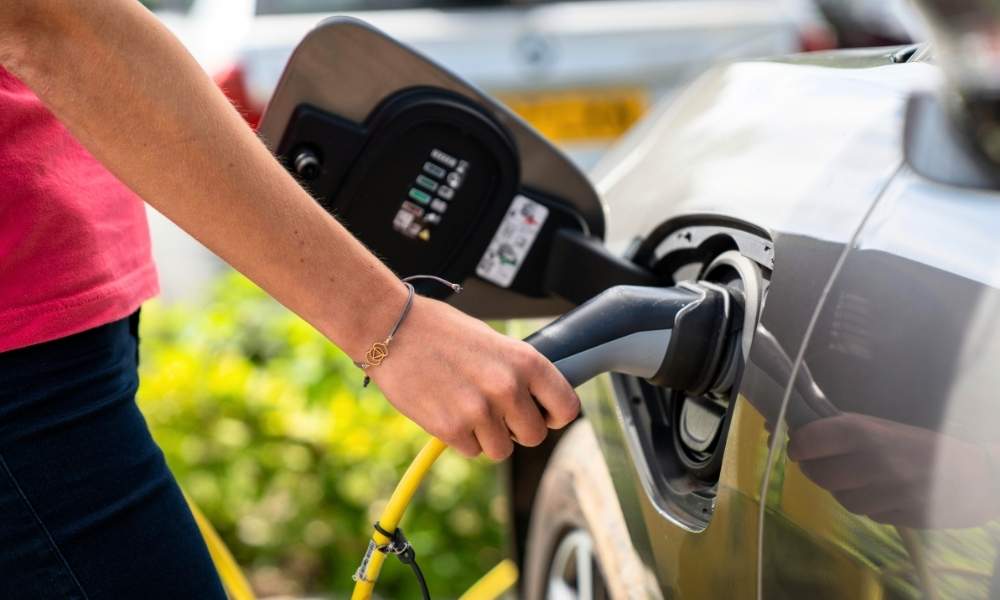
The idea that your electric vehicle (EV) could power your home or even earn money from the grid is quickly moving from theory to reality. Terms like Vehicle-to-Home (V2H) and Vehicle-to-Grid (V2G) are starting to show up in product specs, policy updates, and energy conversations. However, for most homeowners, they still feel abstract.
The important question, really, is not about how the technology works. It’s what it actually does for your power bill.
V2H and V2G are often grouped together, but they operate in very different ways. One helps you avoid buying expensive electricity at night. The other promises income by selling energy back to the grid during peak demand. On paper, both sound valuable. In practice, only one is consistently delivering savings for most homes today.
V2H turns solar into usable night-time power
More often than not, the biggest energy cost in households is in the evening, when demand spikes and electricity prices are at their highest. This is where V2H creates immediate value.
Instead of exporting excess solar during the day for a low feed-in tariff (FiT), your electric vehicle (EV) stores that energy and feeds it back into your home at night. You’re effectively shifting your own energy to the most expensive part of the day, without relying on the grid.
That shift does two things at once:
- It reduces how much electricity you need to buy,
- It avoids peak pricing altogether.
In a market where FiTs continue to fall, and peak rates remain high, that kind of self-consumption is one of the most reliable ways to bring your bill down.
V2G depends on the system around you
V2G sounds more powerful on paper because it introduces the idea of earning from your energy. Instead of just avoiding costs, you’re selling back into the grid when demand is high. But the value here isn’t fully in your control.
V2G only works when four things line up at the same time:
- The car can export
- The charger can handle it
- The network allows it
- The tariff makes it worth it
That’s a lot of variables for something meant to save you money. Even then, export limits still apply. Many homes are capped on how much they can send back to the grid, which means the income potential isn’t always as high as it looks.
The upside is real, but it’s conditional. And for most households today, those conditions aren’t fully in place yet.


Export limits shape what you can actually earn
Even if everything lines up, V2G still runs into a hard ceiling: how much energy you’re allowed to export.
Most homes already have export limits in place, often around 5 kW or less. Those limits don’t change just because your EV can send power back to the grid. Your vehicle is effectively competing with your solar system for the same export capacity. That creates a bottleneck.
If your solar is already exporting during the day, there’s little room left for your EV to export later. And even during peak periods, you may be capped on how much you can send, regardless of how much energy your car is holding.
On top of that, FiTs are not designed to consistently reward high-value exports. Outside of specific programs or time-based incentives, the rate you’re paid may not reflect the peak pricing you’re trying to target.
The result is that V2G income is limited by the rules of the network itself.
The one that lowers your bill today
If the goal is to pay less for energy, then the difference becomes clear.
V2H works within your home. It doesn’t rely on approvals, tariffs, or export capacity. You store your solar and use it when electricity is most expensive. The savings show up immediately because you’re avoiding peak rates altogether.
V2G, on the other hand, depends on conditions outside your control. Even when it works, the return is shaped by limits, pricing structures, and availability. The upside exists, but it’s not something most households can consistently access today.
That’s why, right now, V2H is doing the heavy lifting. It’s because it’s simpler, more predictable, and already aligned with how Australian energy pricing works.
Where V2G could pull ahead
That doesn’t mean V2G isn’t worth watching. As networks evolve and more dynamic pricing models roll out, the value of exporting energy at the right time could increase significantly. Time-of-use tariffs, demand response programs, and virtual power plants (VPPs) are all building toward a system where your EV isn’t just storage. It’s an active participant in the grid.
In that environment, timing becomes everything. Selling energy during peak demand windows could deliver stronger returns than simply avoiding usage. But that future depends on scale. It requires wider support from networks, more compatible vehicles and chargers, and pricing structures that properly reward export at the right time.
Until those pieces are fully in place, V2G remains a high-potential play that’s still taking shape.

What to choose based on your setup
Use this as a quick guide:
Go with V2H if you want to lower your bill now
- You have rooftop solar
- Your biggest energy use is in the evening
- You want predictable savings without approvals
- You’re on low or declining FiTs
- You prefer using your own energy instead of exporting it
Focus: Reduce what you buy from the grid
Consider V2G if you’re planning ahead
- Your EV and charger support bidirectional export
- Your network allows exports beyond standard limits
- You have access to time-based premium FiTs
- You’re open to joining VPPs or energy programs
- You’re willing to wait for better pricing structures
Focus: Earn from exporting energy when conditions allow
Simple rule to follow
- Start with V2H to lock in immediate savings
- Add V2G later when your setup and the grid can support it
The bottom line
V2H and V2G are often talked about as if they deliver the same outcome. They don’t.
One reduces your reliance on the grid by using energy you already generated. The other tries to turn your EV into a source of income, but only when the system around it allows.
Right now, Australian households are getting more consistent value from keeping energy in their homes than sending it back out.
If your goal is to lower your bill today, the answer is straightforward.
Use your EV like a battery first.
Then, as the rules, pricing, and infrastructure improve, look at how exporting could start to work in your favour.
Energy Matters has been in the solar industry since 2005 and has helped over 40,000 Australian households in their journey to energy independence.
Complete our quick Solar Quote Quiz to receive up to 3 FREE solar quotes from trusted local installers – it’ll only take you a few minutes and is completely obligation-free.