



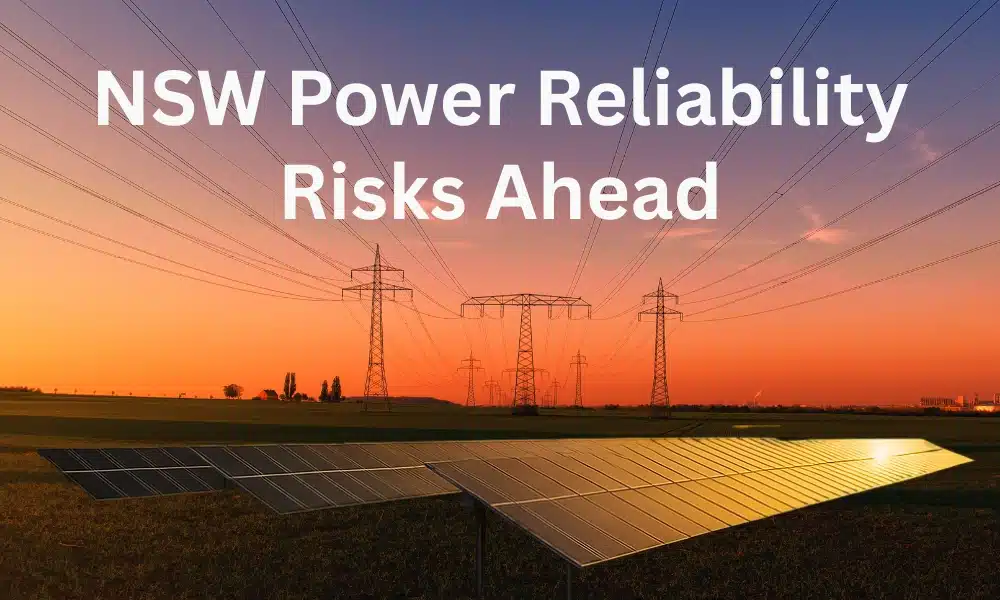
The energy landscape of New South Wales (NSW) is undergoing a profound and necessary transformation. For decades, the state relied on a fleet of massive, centralised coal-fired power stations to meet its energy needs. However, these aging ‘workhorses’ are now reaching the end of their design lives, becoming increasingly unreliable, and contributing significantly to carbon emissions.
This transition—from a synchronous, thermal-dominated system to one powered by wind, solar, and storage—is creating a temporary, but acute, risk to power reliability. The challenge lies in ensuring that new, clean energy generation, storage, and the crucial transmission links are built and operational before the coal power stations retire. Actionable steps are now needed to secure the future of NSW grid stability, solar power, and the broader energy mix.


Why NSW faces power reliability risks
The NSW electricity grid is undergoing rapid transformation. Traditionally powered by coal-fired stations, the state is now phasing out these plants while transitioning toward renewable energy sources.
But this shift comes with challenges:
- Sudden coal plant closures can create supply gaps.
- Renewables, such as solar and wind, are weather-dependent.
- Grid infrastructure requires modernisation to handle decentralised energy flows.
Without careful planning, NSW may experience supply shortages during periods of high demand.
Key factors threatening NSW grid stability
1. Coal plant closures
Several ageing coal plants, including Eraring and Bayswater, are set to close in the next decade. Coal currently provides a significant share of NSW’s electricity, so its retirement poses risks to supply reliability.
2. Rising demand
Electric vehicle (EV) adoption, population growth, and the electrification of heating and cooling systems will strain the grid. Higher peak demand periods could result in more frequent blackouts if capacity does not keep pace with demand.
Powering up your EV with solar
If you’re thinking of buying an EV, adding an EV charger to your solar system is a smart way to “fuel” your car with clean, renewable energy.
3. Intermittency of renewables
While solar and wind are clean and affordable, they cannot generate consistently. Cloudy days and low wind conditions can lead to gaps in supply unless backed by storage or alternative sources.
4. Ageing infrastructure
Much of NSW’s transmission and distribution infrastructure was built decades ago. Without upgrades, it may struggle to integrate distributed energy sources, such as rooftop solar panels and large-scale renewable energy sources.
5. Extreme weather events
Bushfires, floods, and heatwaves place added stress on the grid. High temperatures increase air conditioning demand, while storms damage power lines and disrupt distribution.




How solar can improve NSW grid stability
NSW grid stability solar solutions are central to overcoming reliability risks. By decentralising generation, solar reduces dependence on ageing coal stations and strengthens local supply.
Benefits of solar include:
Peak demand reduction: Rooftop solar systems generate the most energy during hot days when air conditioning demand is highest.
Distributed generation: Reduces pressure on transmission lines by producing electricity close to where it is consumed.
Storage integration: Solar batteries provide backup power during outages and store excess generation for use after sunset.
Use Energy Matters’ easy-to-use solar power and battery storage calculator to determine the size of your solar system with storage! Our solar calculator will generate performance information and potential savings.
We can send this information to 3 of our pre-vetted and trusted local installers in your area to receive obligation-free solar quotes and take the first step towards true energy independence!

Government and market responses
Renewable Energy Zones (REZs)
The NSW government is investing in REZs to attract large-scale solar, wind, and storage projects. These zones aim to replace retiring coal with clean, reliable energy sources.
Capacity investment scheme
Federal and state initiatives are supporting battery storage and firming capacity to smooth renewable generation. This includes utility-scale batteries and pumped hydro projects, such as Snowy 2.0.
Grid modernisation programs
Investment in smarter transmission networks, demand management, and digital grid technologies will help NSW adapt to decentralised power.


What NSW households can do to reduce power risks
1. Install rooftop solar
Households with rooftop solar panels reduce reliance on the grid, particularly during daylight hours. This lowers exposure to peak demand periods and potential outages.
2. Add battery storage
Solar battery storage systems store excess energy generated during the day, making it available at night or during power outages on the grid. This boosts resilience and energy independence.
3. Participate in VPPs
By joining a Virtual Power Plant (VPP), households can pool their stored solar energy and support the grid during periods of high demand. This not only helps grid stability but can also earn financial rewards.
4. Improve energy efficiency
Simple steps, such as upgrading insulation, installing energy-efficient appliances, and utilising smart thermostats, reduce demand and ease the strain on the grid.
Let Energy Matters help you harness the sun’s power for a greener tomorrow. Discover the range of solar landscape lighting, garden solar systems, and eco-friendly products at our Energy Matters Marketplace, featuring solar panels, energy storage solutions, and energy-efficient upgrades. Start your journey towards a more sustainable and eco-friendly outdoor living experience today.