




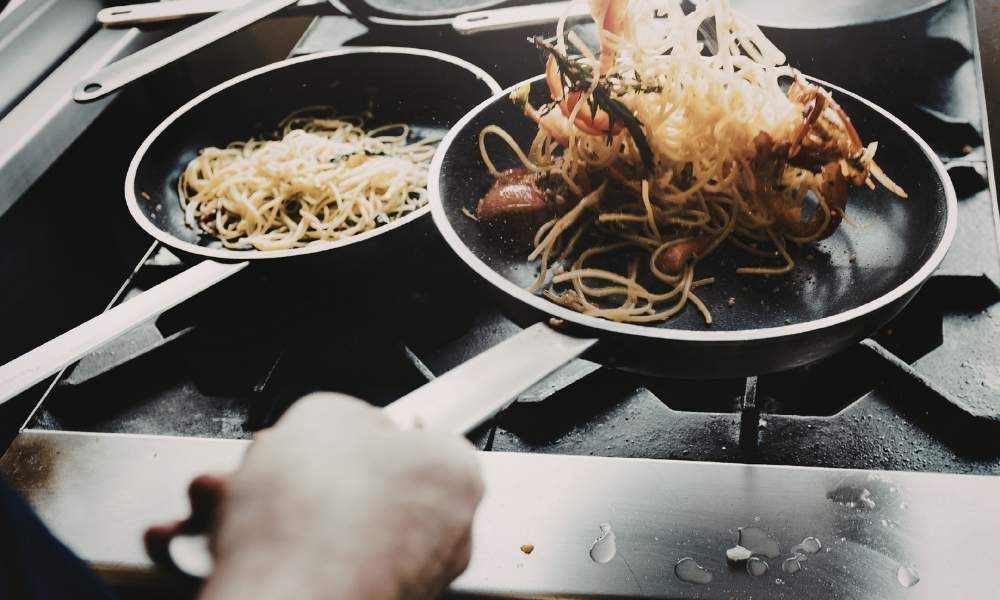
There’s a small flame burning inside many modern homes every day. It lights up in the morning for coffee, again at night for dinner, and on weekends without much thought. Even in houses with solar on the roof and electric appliances everywhere else, the stovetop is often still powered by gas.
Cooking feels harmless compared to heating or hot water because the flame is small and the use is familiar. However, it’s one of the most regular fossil-fuel habits in the home and one of the few that still happens indoors.
For many households, the kitchen is where electrification quietly stops.
How often the stovetop is actually used
The stovetop is part of the daily rhythm of the house. It’s used all day, especially on weekends. Even when meals are simple, the burners still come on… briefly, but frequently.
Each use on its own feels insignificant, but over weeks and years, it all adds up. Unlike heating or hot water, the stovetop doesn’t have a seasonal break. In fact, it’s one of the most consistent fossil-fuel habits in the home.
Why gas cooking became the default
Gas earned its place in the kitchen for understandable reasons. Older electric cooktops were slow to heat, hard to control, and frustrating to cook on. Gas offered instant heat, visible feedback, and the feeling of control that mattered to home cooks. That reputation stuck.
Even as the rest of the house moved toward electricity, gas cooking kept its status as the “serious” option. It became associated with performance, responsiveness, and proper cooking, while electric carried the baggage of outdated technology.
What’s changed is the technology itself. Modern electric cooktops don’t work the way those old systems did, but the assumption that gas is still superior has lingered long after the conditions that created it.



What induction actually changes
Induction cooktops don’t heat the surface, but they heat the pan itself. Instead of warming the air around the cookware and waiting for heat to transfer, induction uses a magnetic field to generate heat directly in the base of the pan. That’s why water boils faster, temperature changes happen almost instantly, and energy isn’t wasted escaping into the kitchen.
In practical terms, cooking becomes more precise. You can bring a pot to the boil quickly, then drop to a gentle simmer without delay. The cooktop surface stays cooler because it isn’t producing heat on its own, which also makes spills easier to clean and reduces excess heat in the room.
This is where the old gas-versus-electric debate starts to flip. The control people associate with gas is still there, but without the flame.
Why this matters if you have solar
Cooking lines up surprisingly well with solar production. Daytime meals, weekend cooking, and food prep often happen while your panels are generating electricity. With an induction cooktop, that energy can come straight from your roof instead of from a gas connection.
Each meal might only use a small amount of energy, but it’s a daily habit. Over time, changing cooking from gas to electricity becomes another way to use more of what your solar system produces and rely less on fossil fuels inside the house.
It’s not about changing how you cook, but about changing what powers it.
Indoor air quality and safety
Gas cooking brings combustion into the centre of the home. Even with ventilation, that means burning fuel indoors every time a burner is on.
Induction removes that entirely. There’s no flame, no fumes, and no by-products released into the air. For households with enclosed kitchens, young children, or anyone sensitive to indoor air quality, that difference matters more than most people realise.
There’s also a safety shift. The cooktop surface doesn’t stay hot in the same way a gas or traditional electric place does. Once the pan is removed, the heat drops quickly. Spills are less likely to burn on, and there’s no open flame to worry about if something boils over.
The popular brands of induction cooktops
Induction cooktops aren’t niche or experimental anymore. They’re now standard across the same appliance brands Australians already trust in their kitchens.
- Bosch: Widely recognised for reliable, mid-to-high range induction cooktops with strong temperature control and practical features for everyday cooking.
- Westinghouse: Popular in many homes, offering induction options that are accessible, familiar, and easy to integrate into existing kitchens.
- Fisher & Paykel: Known for design-led appliances, with induction cooktops that focus on precision, usability, and clean kitchen integration.
- Miele: Positioned at the premium end, often chosen for advanced control, build quality, and long-term durability.
- SMEG: Combines induction technology with distinctive design, appealing to households upgrading both performance and aesthetics.
The important point is normalisation. Induction isn’t a specialist choice anymore, but a part of the core range from brands people already buy when they renovate or replace kitchen appliances.
When gas cooking can still make sense
There are cases where gas remains the practical option. Homes set up for high-heat wok cooking may prefer the flame control and specialised burners that some gas cooktops offer. Renters are often limited by what’s already installed, and in heritage homes or older apartments, electrical upgrades may not be straightforward.
But for many households, those situations are the exception rather than the rule. In modern homes with adequate electrical capacity, the reasons for keeping gas in the kitchen are increasingly about familiarity. For most everyday cooking, the advantages that once made gas the default no longer apply.

The last flame in the house
For many homes, the stovetop is the final place where fossil fuels still burn indoors. It’s used every day, often without thought, even as the rest of the house runs on electricity from the roof. Induction doesn’t ask you to change how you cook or what you cook. It simply removes the frame from the equation.
Once heating, hot water, and cooking all shift to electricity, the gas connection starts to feel less essential. The kitchen, like the rest of the house, finally catches up.
You electrified your roof. The flame in the kitchen is often the last thing waiting to go.
Energy Matters has been in the solar industry since 2005 and has helped over 40,000 Australian households in their journey to energy independence.
Complete our quick Solar Quote Quiz to receive up to 3 FREE solar quotes from trusted local installers – it’ll only take you a few minutes and is completely obligation-free.