The rise of electric vehicles (EVs) is changing how we live. Apartment EV charging is now a critical priority for thousands of Australians living in high-density housing. As more drivers switch to sustainable transport, strata committees and tenants must find workable solutions.
Understanding strata and body corporate rules for EV charging
Every Australian state and territory has its own strata or body corporate legislation. These laws govern how common property is used and what changes owners or tenants can make. Before installing an electric car charging station, you need to understand these rules.
What is common property?
In a strata scheme, common property includes shared spaces such as car parks, driveways, lifts, and electrical infrastructure. Installing an EV charger in these areas usually requires body corporate approval. Even if your car space is privately owned, the wiring may run through common property, which means you still need to go through the approval process.
Powering up your EV with solar
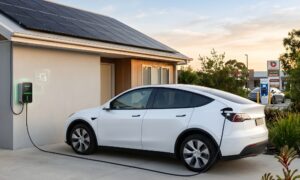
If you’re thinking of buying an EV, adding an EV charger to your solar system is a smart way to “fuel” your car with clean, renewable energy.
Key legislative changes across Australia
Several states have updated their strata laws to make EV charger installation easier. Here is a quick overview:
- New South Wales: Strata law changes allow lot owners to install EV chargers with simpler approval processes.
- Victoria: Owners’ corporations cannot unreasonably refuse EV charger requests from lot owners.
- Queensland: Body corporates must consider EV charger requests within a set timeframe.
- South Australia & WA: Evolving frameworks are pushing toward easier EV infrastructure approvals.
It is always advisable to consult a strata lawyer or manager for the most current rules in your state. Legislation is still evolving as EV adoption grows.
[metaslider id=”138351″]
Apartment EV charging options: What are they?
The good news is that there are several practical options for EV charging in Australian apartments. The right solution depends on your building’s electrical infrastructure, the type of car space, and your body corporate’s willingness to collaborate.
1. Individual EV charger in your own car space
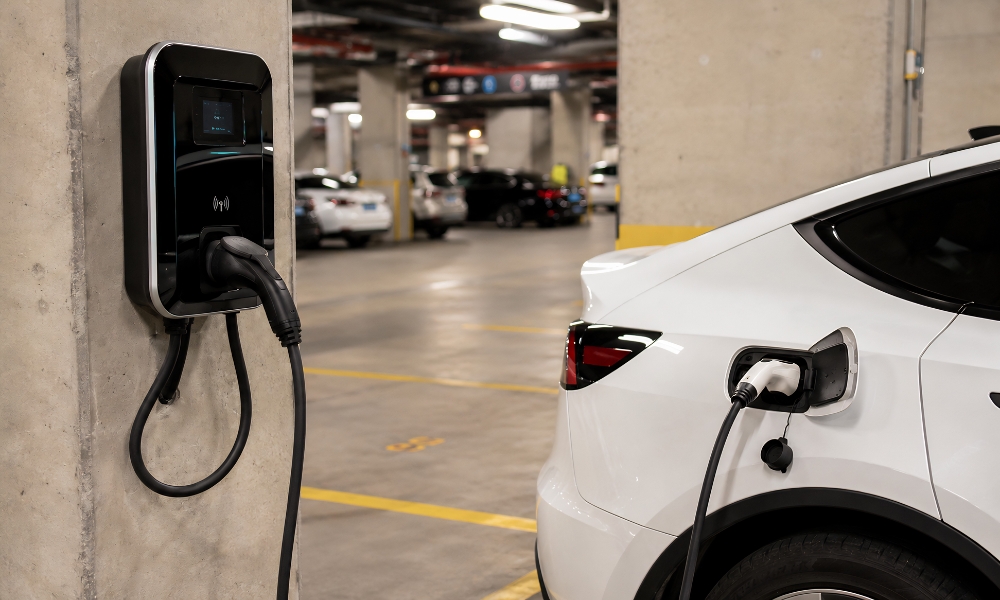
If you own your car space (as a separate lot or part of your strata title), you may be able to install a dedicated electric car charging station. This is the most straightforward solution when your car space is close to an existing power supply.
You will need body corporate approval if any wiring runs through common property. A licensed electrician must carry out the work. Costs typically range from $1,500 to $3,500, depending on the complexity of the installation.
2. Smart EV charger with load management
Smart chargers — including the popular EV Switch charger — can monitor your apartment building’s electricity load and adjust charging speed to avoid overloading the grid. This makes them ideal for apartment settings where electrical capacity is often shared.
EV Switch charger systems allow multiple residents to charge simultaneously without tripping the building’s main switchboard. They are one of the most practical solutions for multi-dwelling units (MDUs) in Australia.
3. Shared charging stations for the whole building
A shared charging solution allows multiple residents to use the same charging infrastructure. The body corporate installs one or more EV chargers in the common car park. Residents can then pay for their own usage through smart metering or an app.
This is one of the most cost-effective options for large apartment buildings. Upfront costs are shared, and it provides access to all residents — including renters. Buildings with 20 or more units often find this approach the most sustainable in the long term.
4. Using a portable EV charger
A portable EV charger (also called a trickle charger) plugs into a standard household power point. While this is the cheapest option upfront, it is also the slowest. It typically delivers only 10–15 km of range per hour of charging. This option suits drivers who don’t travel long distances daily.
Check our page for our recommended EV charger products.
[metaslider id=”150087″]
How tenants can access apartment EV charging
Renters face additional hurdles when it comes to EV charging in apartments. You cannot make permanent changes to the property without your landlord’s consent. However, there are still practical paths forward.
Talk to your landlord
Some landlords are open to installing EV chargers if tenants agree to cover the cost. Frame it as an upgrade that adds value to the property. You can offer to restore the space to its original condition when you leave.
Request a shared charging option
If your building already has or is considering shared EV charging, ask your landlord or property manager to raise the idea with the body corporate. Shared infrastructure benefits all residents and can even attract higher rents.
Know your rights
In some states, landlords cannot unreasonably refuse a tenant’s request to install an EV charger, particularly if the tenant is willing to bear the cost. Always check your state’s residential tenancy laws before proceeding.
How to get body corporate approval for EV charger installation
Getting body corporate approval is often the biggest hurdle. But with the right approach, it doesn’t have to be a lengthy battle. Follow these steps to improve your chances of success:
1. Review your strata by-laws: Check if there are existing rules about alterations or electrical work.
2. Commission a technical report: An electrician’s assessment showing the feasibility and safety of your proposed EV charger installation strengthens your case.
3. Submit a formal application: Write a clear, professional request to the body corporate committee. Include technical details, costs, and how you will minimise impact on other residents.
4. Propose a load management solution: Offer a smart charger that won’t strain the building’s electrical capacity. The EV Switch charger is one well-regarded option for this purpose.
5. Engage a strata manager or lawyer if needed: If the body corporate refuses without reasonable grounds, you may have legal options to appeal.
Government incentives and support for apartment EV charging
Several Australian state governments offer incentives to support EV infrastructure in apartment buildings. These can help offset the cost of installation:
- ACT: The ACT Government offers interest-free loans and rebates for EV charging infrastructure in strata buildings through the Sustainable Household Scheme.
- Victoria: The Solar Homes program has expanded to cover EV charging in some circumstances.
- Federal: The Australian Government’s Electric Vehicle Strategy aims to expand national charging infrastructure, with funding directed toward multi-dwelling settings.
Always check the latest incentives with your state government or a trusted energy advisor, as programs change regularly.
[metaslider id=”138379″]
Let Energy Matters help you
Apartment EV charging in Australia is no longer a distant dream. With smarter technology, evolving strata laws, and a growing range of solutions — from individual chargers to EV Switch systems and shared station setups — there is a viable option for almost every situation. Whether you own or rent, the key is to understand your rights, engage your body corporate early, and choose the right EV charger installation partner.
Energy Matters is here to help you every step of the way. Contact our team today for expert solar advice and a free, no-obligation quote for EV charging solutions for your apartment.
Sources and References:
- Electric Vehicle Council – State of Electric Vehicles Report
- NSW Fair Trading – Strata Living and Electric Vehicles
- Consumer Affairs Victoria – Owners Corporations
- Queensland Government – Queensland Body Corporate and Community Management
- ACT Government – Sustainable Household Scheme (Climate Choices)
- Australian Government – Electric Vehicle Strategy