







The atomic structure of a moth’s eye and lotus leaves have inspired scientists from the USA’s Oak Ridge National Laboratory (ORNL) to create new water-repelling, anti-reflective glass coating that could increase the efficiency of solar panels by up to six per cent.
“While lotus leaves repel water and self-clean when it rains, a moth’s eyes are antireflective because of naturally covered tapered nanostructures where the refractive index gradually increases as light travels to the moth’s cornea,” said Tolga Aytug, member of ORNL’s Materials Chemistry Group.
“Combined, these features provide truly game-changing ability to design coatings for specific properties and performance.”
The researchers have developed a process for manufacturing a highly robust nanostructured base material that takes advantage of the unique hydrophobic nature of the lotus leaf, whereby water literally bounces off the surface, taking dirt and dust with it.
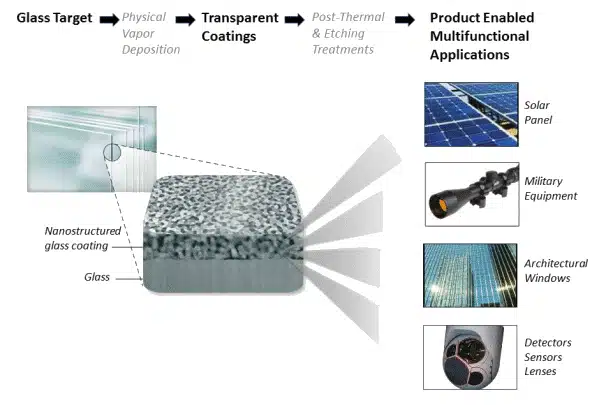
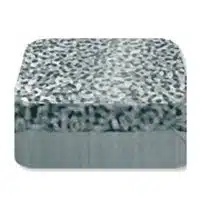
“We developed a method that starts with depositing a thin layer of glass material on a glass surface followed by thermal processing and selective material removal by etching,” Aytug said. “This produces a surface consisting of a porous three-dimensional network of high-silica content glass that resembles microscopic coral.”
The material is produced using inexpensive industry-standard techniques and can be easily scaled up for a variety of uses, such as algae-resistant marine glass, the group said. It is also super tough, capable of withstanding high temperatures.
“This quality differentiates it from traditional polymeric and powder-based counterparts, which are generally mechanically fragile,” Aytug said. “We have shown that our nanostructure glass coatings exhibit superior mechanical resistance to impact abrasion – like sand storms – and are thermally stable to temperatures approaching 500 degrees Celsius.”
The nanoporous nature of the coating suppresses “Fresnel” light reflection – the amount of light reflected versus the amount of light transmitted – allowing more wavelengths of light at wider angles to flow through glass surfaces. It also effectively blocks ultraviolet light, which can degrade sensitive optical technology.
This enhanced light absorbing characteristic would have the ability to increase the light-to-electricity conversion efficiency of solar cells by three-to-six per cent, according to the ORNL team. And the superhydophobic glass coating would remove the need to clean solar panels, lowering the overall cost of rooftop solar power systems.
The material has many potential applications beyond solar energy, including goggles, periscopes, optical instruments, photodetectors and sensors.
The ORNL team’s work, titled “Monolithic Graded-Refractive-Index Glass-based Antireflective Coatings: Broadband/Omnidirectional Light Harvesting and Self-Cleaning Characteristics,” is published in the Journal of Materials Chemistry C.