





Have you ever thought of adding solar panels to your Electric Vehicle (EV)? An increasing number of Aussies today have rooftop solar panels installed on their properties, showing the eagerness of many homeowners and business owners to shift towards renewable energy.
In addition, Australia has a net zero goal to achieve by 2050, and the whole country is right on track with the growing number of renewable energy projects in every state, and with more EVs seen on the roads.
So far, the EVs we see on the roads don’t disappoint—from Tesla, Polestar, BMW, Hyundai, and more. They all have impressive features, but have you ever seen an EV with solar panels on its roof?
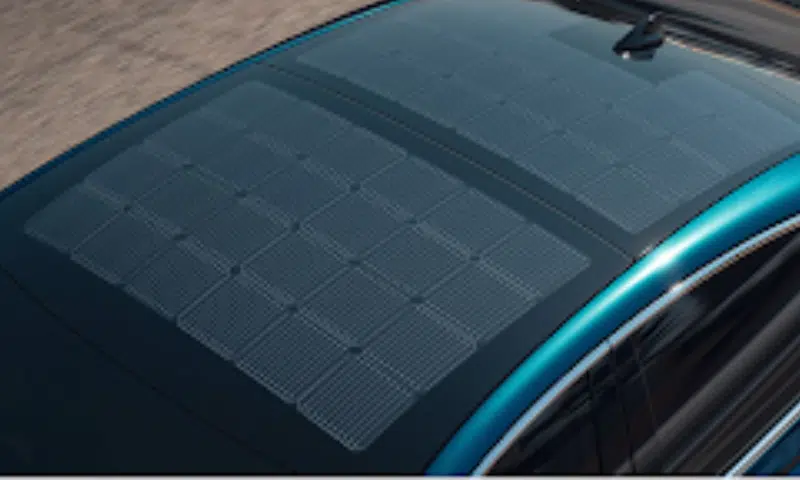
The Genesis Electrified G80 is the first of its kind as the sedan comes with a solar roof panel, which is designed to add approximately 1,100km of driving range in a year.
Solar roof panel on an EV
The Genesis G80 EV’s rooftop solar array is built from a photovoltaic silicon material that produces power that is delievered to the EV’s 87.2kWh battery when driving or parked; that’s like charging the vehicle minus the plug. It can also charge the G80’s low-voltage 12V battery, which will add more power to the EVs features, such as its air-conditioning.
When the panel receives sufficient sunlight, it will produce energy that can power two 100W bulbs or 11 LED fluorescent lamps.
Genesis
Genesis is one of the latest luxury brands to enter Australia. They have introduced new models that include two electric vehicles—and one of them is a G80. You can see the status of the rooftop panel on the charging screen with a panel above the G80.
The Genesis also has other green features, such as its hidden charging port in the front grill. You won’t be able to see it until you need to use it, and once at a rapid charger, the post can be pushed open.

Solar roofs on EVs: how effective are they?
Putting a solar roof on an EV has plenty of benefits. One, it can extend the driving range and supply more power during the day. Another thing is that solar cells on an EV can reduce power draw on hot sunny days from the AC.
The charging costs will also be reduced because the solar panel on the roof can charge itself while the sun is out, and it will also let the battery pack charge even without a grid connection. Thus, this can also protect the battery as it will prevent its charge level from dropping too low when not in use. EV owners can also use the vehicle as a power source during a blackout.
On the other hand, a solar roof on an EV also comes with disadvantages. An obvious disadvantage is that an EV with solar cells will be more costly.
Still, when you weigh the pros and cons of a solar roof on an EV, it’s apparent that it is worth it.
Energy Matters has over 17 years of experience in the solar industry and has helped over 40,000 Australian households in their journey to energy independence.
Complete our quick Solar Quote Quiz to receive up to 3 FREE solar quotes from trusted local installers – it’ll only take you a few minutes and is completely obligation-free.
A limit on solar cells
One thing to remember is that there is a limit to the number of solar cells installed on a vehicle. For example, the Genesis G80, a sedan, can fit only approximately two square meters of solar cells.
It is possible to add more solar cells, as seen in the Lightyear One EV, in which the manufacturer was able to fit five square metres of PV using the roof and bonnet.
Decarbonising transport in Australia
In June, three infrastructure peak bodies issued a new report to speed up the transport sector’s journey to net zero. Currently, there are 46 recommendations to speed up decarbonisation in the sector that set out actions for industry and government to help support driving
emissions reduction, supporting renewables and innovation investment, and promoting engagement and collaboration.
This is because the transport sector will play a significant role in Australia’s journey to net zero. However, there is still some work to be done and so many things that industries and governments can amplify to make progress.
The report has identified five areas that can support and drive action to the sector to net zero. For one, a national and strategic approach focusing on placemaking will help meet the community’s long-term needs.
Another thing is the need to introduce policies and investments that will help promote efficient, resilient, and sustainable transport systems. It also highlights the importance of collaboration, education, and capacity building throughout all stages of the process.
The adoption and promotion of technology solutions, along with the implementation of governance structures, are also necessary to further speed up the decarbonisation of transport systems.
Are you ready to make your next car an EV? Book a test drive today!