



On this page
Over the past decade, Australians have embraced solar energy. Around 30% of households in Australia utilise rooftop solar PV, which is the highest solar uptake percentage globally. There are over 4 million PV installations in Australia as of the first quarter of 2025.
Solar PV systems are constructed to be investments that, once paid for, will provide free electricity during the daytime for its owner, resulting in cost savings. And by installing solar PV systems, sunlight is converted into electricity with no greenhouse emissions.
Solar PV systems’ success in Australia is also due to federal and state government support schemes for solar installation and the installation of home storage batteries, like the Tesla Powerwall 3. Make your home more energy-efficient and get a FREE solar quotes now.
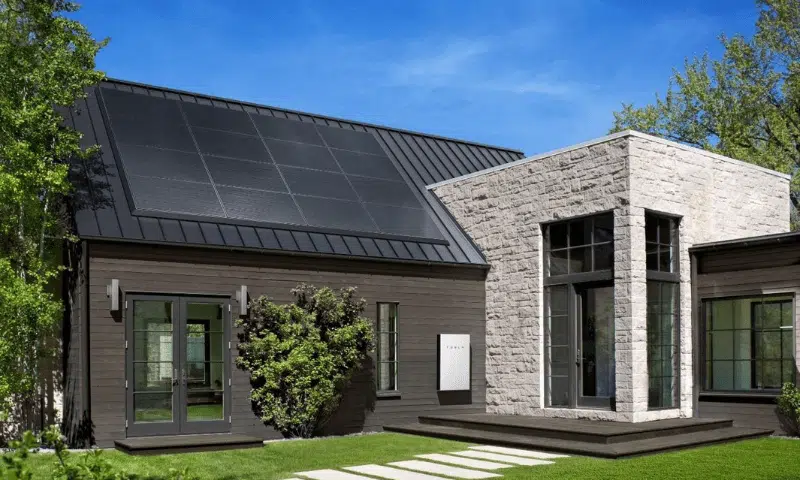
So let’s look at the home solar rebates, solar battery rebates, subsidies, and incentives available to you and how you can access them. Use our free solar quote system to get up to 3 free solar quotes from our network of trusted, local installers.
Three primary sources of solar rebates or incentives are available to Australian households.
- Federal government
- State governments (some, but not all)
- Electricity retailer
Energy Matters has been a leader in the renewable energy industry since 2005 and has helped over 40,000 Australian households in their journey to energy independence.
Let us discuss and choose the best quote that suits your needs and budget, and we can connect you with our trusted local installers, who will provide up to 3 FREE quotes for your home and business solar energy system.
Financial Incentives: Federal Government Solar Rebate
Small-scale Renewable Energy Scheme
Small-scale renewable energy systems such as solar panel systems, small-scale wind systems, small-scale hydro systems, solar water heaters, and air source heat pumps are all eligible under the Small-scale Renewable Energy Scheme (SRES), which provides financial incentives to all Australian individuals and small businesses. It accomplishes this by creating Small-scale Technology Certificates (STC). The federal government established the scheme in 2011 to help achieve Australia’s Renewable Energy Target.
Small-Scale Technology Certificates (STCs) have been hugely successful in stimulating demand for solar amongst households and small businesses. Available to everyone in Australia, STCs are an incentive well worth utilising. STCs are available for solar panel installations up to 100kW.
Each STC has a monetary value which can be either credited to your installer or sold on the open market in exchange for a point-of-sale solar rebate. The maximum number of certificates per solar system is determined by the system’s location, date of installation, and electricity consumption in megawatt hours (MWh), that is:
- generated over one or five years, or a single maximum deeming period, by a small-scale solar panel, wind, or hydro system
- displaced over a single maximum deeming period by the solar water heater or heat pump
The Renewable Energy Target operates by creating tradable STCs that provide a financial incentive for more electricity production from renewable sources. Through the REC Registry, an online trading platform managed by the Clean Energy Regulator, STCs are issued and distributed.
STCs are calculated under the Small-scale Renewable Energy Scheme based on:
- solar system location
- installation date, and
- if they are created over one or five years, or a maximum deeming period.
The scheme is being slowly phased out, with a reduction in the value of STCs occurring on the 1st of January each year through 2030. The scheme will end on 31 December 2030.
Check out our page to learn more about how to calculate STCs and solar credits.
Cheaper Home Batteries program
The federal government will be providing financial support for the purchase and installation of home and small business batteries from 1 July 2025.
Find out more by visit our Federal Rebate: Cheaper Home Batteries page.
State government rebates and incentives
At the state level, the picture is highly varied. There are many state government solar home rebates and incentives for people living in Victoria, NSW, South Australia, NT, WA or the ACT. There are currently no state government incentives for home solar batteries if you live in Queensland or Tasmania.
Energy Matters can help you make an informed decision and the perfect option on the suitability of a solar battery with our Solar Power and Battery Storage Calculator.
Learn more about the Cheaper Home Batteries Programs on our comprehensive page.
Electricity retailers - Feed-in Tariff (FiT)
Households in all states of Australia are repaid by their electricity retailer for any excess solar power their system generates and is exported to the grid. The amount shown as a credit on your electricity bill is known as a feed in tariff. The value of the feed-in tariff varies from state to state and between electricity retailers.
You should shop for the electricity supply deal that best meets your requirements. Energy Matters provides a FREE energy comparison service that can instantly display the best available deals for your home. You can then choose to make the switch!
An overview of what’s available state-by-state is shown in the chart below:
State | Small-scale Technology Certificates (Federal gov) | Feed(for solar exports)-in tariff (Energy retailer) | Solar panels rebate (State gov) | Home batteries rebate | Electric Vehicle (EV) / Zero Emissions Vehicle (ZEV) | Zero interest loans |
VIC | YES | YES | YES | YES | YES | YES |
SA | YES | YES | YES – in Adelaide | YES-under Virtual Power Plant (VPP) | YES | YES |
NSW | YES | YES | YES – free solar for low income
households in specific locations | YES (from 1 Nov 2024) | YES | NO |
ACT | YES | YES | YES – for low income households | NO | YES | YES |
QLD | YES | YES | NO | NO | YES | NO |
WA | YES | YES | NO | NO | YES | NO |
TAS | YES | YES | NO | NO | YES | NO |
NT | YES | YES | NO | YES | YES | NO |
Australian States and Territories- Household Solar Incentives
Victoria (VIC) solar rebates and incentives
The following solar rebates in Victoria are available for solar power systems:
From 1 July 2026, Solar Victoria has reduced the household taxable income eligibility threshold for its solar panel rebate and interest-free loan program from $210,000 to $150,000 per year. Eligible Victorian households can still apply for a solar panel rebate of up to $1,400 and an additional interest-free loan of up to $1,400 for solar panel (PV) system installations. The program remains available for existing homes, homes under construction and rental properties, provided applicants meet all eligibility requirements.
Households that exceed the new $100,000 taxable household income cap will no longer qualify for the Solar Homes rebate or loan from 1 July 2026. Victorians who meet the previous eligibility requirements and are considering solar may wish to check their eligibility and apply before the new rules take effect.
The scheme operates alongside the federal government’s Small-scale Technology Certificates (STCs), which can further reduce the upfront cost of a solar installation.
Visit our Virtual Power Plant (VPP) page for more VPP’s offers in Australia
Type of rebate | Amount | NO. AVAILABLE 16 SEPTEMBER 2026 |
Victoria Feed In Tariff | From 1 July 2025, Victoria deregulated solar feed-in tariffs, giving electricity retailers full control over the rates they set. The change followed years of declining minimum tariffs, with the regulator’s final rate for 2025–26 effectively reaching zero. | - |
Government Incentive through Small-scale Technology Certificates (STC) | The deeming period for solar PV installations, solar water heaters, and air-sourced heat pumps financial incentive is reduced by one year. As a result, fewer certificates will be able to be issued for qualified systems. | - |
Solar panels Victoria – for owner-occupiers | Up to $1,400 + the option of a zero interest loan for existing homes and homes under construction. | 2062 |
Solar panels rebate – for rental properties | Up to $1,400 + the option of an interest-free loan | 1604 |
Solar battery rebate | Up to $8,800 | Closed |
Solar for community housing: a non-profit organisation that offers low-income households access to affordable rental housing | Up to $1,400 | - |
Electric Vehicle (EV)
Zero Emissions Vehicle (ZEV) | Now closed to new applications. However, zero emissions vehicles are still available to order outside of the ZEV program from the Approved Vehicle List. | - |
Solar hot water rebate* | providing a 50% rebate of up to $1,000 | 1700 |
*Solar hot water rebate is currently available on an ongoing basis without any fixed release dates. | ||
The Victorian Energy Upgrades (VEU)
The Victorian Energy Upgrades (VEU) program is a government energy efficiency program that helps Victorian households, and businesses save money on their energy bills and reduce greenhouse gas emissions. The program offers rebates or discounts on energy-saving products and services, including:
- Lighting
- Heating and cooling
- Water heating
- Insulation (including ceiling insulation, added as a formal VEU activity in 2026)
- Solar hot water
- In-home displays
- Window glazing
- Showerheads, Televisions, Clothes dryers, Fridges and freezers
- Commercial and industrial solar PV systems (new eligible activity from 2025–2026, for businesses)
Households and businesses must work with an accredited provider who has the authorisation to install Victorian Energy Upgrades items to get discounted goods and services under the programme. The programme only accepts accredited providers as participants.
The amount of the Victorian solar panel rebate or discount that a household or business receives depends on the type of product they are upgrading and the star rating of the new product. For example, a household can receive a rebate for installing a new 7-star energy-efficient refrigerator and have an inefficient electric or gas hot water system for a solar hot water system.
Check out the Victorian Energy Upgrades website to learn more about the VEU program.
South Australia (SA) solar rebates and incentives
If you live in South Australia and are interested in solar, incentive programs are available to you.
South Australia Feed in Tariff
SA’s feed-in tariff can often change due to market competitiveness and the wholesale price of electricity. Click this link to read more about the best feed-in tariff in SA.
Virtual Power Plants
With a home solar battery, you can connect your home to a Virtual Power Plant (VPP) in South Australia. You can be paid for becoming part of an integrated energy trading system. This solar battery networking capability is fast becoming the new frontier for power trading and energy saving. Click this link for more information.
Here are some of the updated offers and incentives available in South Australia in 2026:
an exclusive electricity tariff offer (check for current discount vs the latest Default Market Offer) plus the ability to join a VPP-enabled battery system
applying the federal “Cheaper Home Batteries” discount (from 1 July 2025) that reduces the upfront cost of a new battery by around 30% when the system is VPP-ready
a state rebate via SA’s REPS scheme for homes that join an approved VPP (up to about A$2,050)
a home battery (e.g., part of a Tesla Powerwall or other VPP-compatible battery) that is reserved for backup in a blackout while also participating in the VPP for grid-support services
A low daily electricity supply charge and/or lower tariff for customers participating in VPP-linked retail offers.
Retailer Energy Productivity Scheme (REPS)
The South Australia Retailer Energy Productivity Scheme, or REPS, helps households and businesses reduce energy use and lower bills. Instead of direct cash rebates, energy retailers fund approved upgrades to meet state energy productivity targets.
REPS can deliver free or discounted energy-efficient upgrades, including insulation, hot water systems, heating and cooling, appliances, and demand response connections for batteries, EV chargers, and pool pumps.
Eligibility varies by activity, with extra support available for priority group households, including concession holders, low-income renters, and customers in hardship programs.
To access REPS, customers choose an eligible activity through a participating retailer or provider. Savings come from reduced upfront costs and ongoing lower energy bills, with outcomes depending on the upgrade, retailer offer, and household energy use.
Sustainability Incentives Scheme – The City of Adelaide
The City of Adelaide provides financial incentives for installing sustainable technology in apartments, commercial buildings and houses to enhance energy and water efficiency. The financial incentive could lower expenses, reduce carbon emissions, and increase the property’s value.
The following households and landlords rebates are available:
- for solar PV systems for concession/senior card holders and tenanted households, up to $5000
- for electric vehicle charging equipment (cars and bikes), up to $5000
- for solar hot water systems, up to $1000
- for rainwater tanks, up to $5000
- for electricity management systems to access off-peak electricity, up to $500
Note: The Sustainability Incentives Scheme’s FY2025/26 round is now closed. A new FY2026/27 round has opened for applications — check the City of Adelaide website for current funding availability and closing dates.
Households, renters and landlords rebates that are available
| INCENTIVE | WHO CAN APPLY | REBATE AMOUNT |
|---|---|---|
| Federal Solar PV Discount (STCs) | Home owners Landlords Tenants | Reduces the cost of solar systems using Small-Scale Technology Certificates — installer applies the discount at point of sale; value varies by system size & STC price (~20–25% of cost). |
| Federal Battery Rebate | Homeowners & business owners | Upfront discount (~30% of battery cost) for eligible home batteries (5–100 kWh); installer passes rebate at point of sale; rebate gradually reduces over time (tiered after 1 May 2026). |
| Solar Feed-in Tariffs (FiTs) | Anyone with grid-connected solar | Payments/credits for excess solar exported to the grid — set by electricity retailers (no minimum mandated in SA). |
| Retailer Energy Productivity Scheme (REPS)/VPP Cash Incentives | SA households & businesses via participating retailers | Some electricity retailers offer up to ~$2,000 cash rebates or other incentives when battery + solar is connected to approved Virtual Power Plants (VPP). |
| Local Council Incentives (where available) | Residents/businesses in certain councils | Some local councils (e.g., City of Adelaide) sometimes offer rebates/discounts for solar, battery, or electrification — not SA Gov wide. |
| Electric Vehicle (EV) Purchase Incentives | – | SA Government’s EV purchase subsidy ended and is no longer available after 31 Dec 2024; registration exemptions expired 30 June 2025. |
| EV Charger Installation Rebates | – | No current state refund available for EV charger installation in SA as of 2026. |
New South Wales (NSW) solar rebates and incentives
NSW Cheaper Home Batteries Program
As of 30 June 2025, the NSW Government suspended its incentive for battery installations under the Peak Demand Reduction Scheme. But it’s not all bad news, the Federal Government launched a new battery rebate on 1 July 2025.
NSW VPP Incentive (Peak Demand Reduction Scheme)
While NSW suspended its upfront battery installation rebate, it expanded a separate incentive for connecting your battery to an approved Virtual Power Plant (VPP) through the Peak Demand Reduction Scheme (PDRS). This incentive is worth up to $1,500 depending on battery capacity (a typical 10kWh battery attracts around $1,100), and it can be stacked with the federal Cheaper Home Batteries Program discount. From 1 July 2026, eligibility expanded to batteries up to 50kWh, and solar panels are no longer required to qualify.
The Federal Government’s Cheaper Home Batteries Program is now underway, offering:
- Up to 30% off the cost of installing a home battery system
- Support for low-income and vulnerable households
- Expansion of the Small-scale Renewable Energy Scheme to include batteries
From 1 May 2026, the rebate structure has moved to a tiered system based on usable capacity. This approach is designed to keep smaller, more affordable battery systems within reach for everyday households, rather than concentrating incentives on larger installations.
The $2.3 billion initiative forms part of the Albanese Government’s plan to reach 82% renewables by 2030.
NSW Feed-in Tariff
According to Energy NSW, there is no mandated minimum feed-in tariff rate in NSW, though there is a benchmark range of 4.8–7.3 c/kWh. Click this link to read more about the best feed-in tariff in NSW.
Government Incentive - Small-scale Technology Certificates (STC)
Every year until 2030, the deeming period for solar PV installations, solar water heaters, and air-sourced heat pumps is reduced by one year. As a result, fewer STCs will issue for qualified systems.
Solar for Low Income Households
The Solar for Low Income Households Program, which once provided free solar systems, has now closed. However, eligible households can still access the Low Income Household Rebate to help reduce electricity bills.
Retail customers
If you receive your bill directly from an energy retailer such as AGL, EnergyAustralia, or Origin, you can receive a rebate of $285 per year, credited to your electricity bill in quarterly amounts. To qualify, you must hold a valid concession card. Commonwealth Seniors Health Card holders are not eligible. If you switch retailers, make sure to tell your new provider to continue receiving the rebate.
On-supply customers
If you receive your electricity bill through a strata manager, community operator, or retirement village, you are considered an on-supply customer. You’ll receive a lump sum payment of $313.50 per year, deposited directly into your bank account. Printed or hand-written invoices may be required if your supplier cannot provide formal printed statements.
Each household can only receive one Low Income Household Rebate per financial year, and the rebate applies only to your main residence.
For Land and Housing Corporation (LAHC) tenants
The earlier Rebate Swap for Solar program, which allowed eligible tenants to exchange their Low Income Household Rebate for a free solar system, has now closed. Instead, LAHC tenants are benefiting from state-wide initiatives such as the Social Housing Energy Performance Initiative (SHEPI) and the Community Housing Energy Performance (CHEP) program. These schemes are delivering solar panels, energy-efficient appliances, and other upgrades to thousands of social housing properties across NSW, helping tenants lower their electricity bills and enjoy long-term energy savings.
Electric Vehicles (EVs)
The NSW government offers $3,000 rebates and the stamp duty exemption for purchasing an EV. Click this link here for more information about the incentives.
Note: The stamp duty refund and the rebate for all eligible EV purchases ended on 1 January 2024.
Australian Capital Territory (ACT) solar rebates and incentives
In 2016, the ACT Government legislated a target of sourcing 100% of the Territory’s electricity from renewable sources. To help achieve this target, the ACT Government is providing incentive programs to encourage ACT households to install solar and home batteries.
ACT Feed-in Tariff
More retailers have entered the market recently, allowing customers to shop around for better deals. Click this link to read more about the best feed-in tariff in the ACT.
Sustainable Household Scheme
The Sustainable Household Scheme provides low-interest loans of $2,000 to $20,000 for energy-efficient renovations. Eligible households can choose from a range of products, including battery storage systems, heating/cooling systems, and more. Repayment terms are up to ten years, with no upfront fees, at a 3% interest rate.
Solar panels are no longer covered by the general Scheme. However, eligible concession card holders can still access zero-interest loans for solar through the Home Energy Support Program.
New applicants can borrow up to $20,000; households that submitted an application or received loan approval before 1 July 2026 remain capped at $15,000 over the life of the scheme.
The EV price threshold for eligible vehicles under the scheme changed to $60,000 from 1 July 2026.
Electric cargo bikes were added as an eligible product category from September 2026.
You may qualify for a low-interest loan to make your home more energy efficient. By upgrading to efficient products, you can reduce your environmental impact while lowering long-term energy costs. Eligible homeowners can borrow up to $20,000, repayable over up to ten years, at a 3% interest rate with no upfront costs or fees.
For further details, visit our page: All the Important Things You Need to Know About ACT’s Sustainable Household Scheme.
The Home Energy Support Program (HESP)
The Home Energy Support Program (HESP) provides eligible ACT homeowners with rebates of up to $5,000 to help cover the cost of installing energy-efficient products. This includes a 50% rebate (up to $2,500) for rooftop solar, and a further 50% rebate (up to $2,500) for one other upgrade, such as reverse cycle heating and cooling, hot water heat pumps or evacuated tube solar hot water systems, electric stovetops and ovens, or ceiling insulation.
If you are eligible, you can also apply for a zero-interest loan of up to $10,000 through the Sustainable Household Scheme to cover remaining costs, giving you access to up to $15,000 in total support.
Eligibility
To qualify, you must:
Be a resident of the ACT and own and live in the home where the product will be installed.
Hold an Australian Government Pensioner Concession Card, Department of Veterans’ Affairs Gold Card, or Health Care Card. (Commonwealth Seniors Health Card holders are not eligible.)
Have a property with an Unimproved Value (UV) of $750,000 or less for freestanding homes, dual occupancies, or unit-titled freestanding properties, or $300,000 or less for unit-titled multi-storey apartments, based on values from any year since 2022.
Attend a free Everyday Climate Choices workshop (online or in person).
Electric Vehicles (EVs)
The ACT Government continues to encourage the adoption of Zero Emission Vehicles (ZEVs) through incentives for individuals and businesses.
From 1 September 2025, stamp duty exemptions on new and used ZEV purchases have ended. A minimum duty rate of 2.5% now applies, with an additional 8% duty charged on the portion of a vehicle’s value above $80,000. Registration fees remain lower for vehicles with lower emissions under the ACT’s emissions-based registration system.
Eligible households can still access low-interest loans of up to $15,000 for buying a ZEV or installing charging equipment through the Sustainable Household Scheme.
At the national level, the Australian Government continues to support ZEV adoption. Since 1 July 2022, employers have not been required to pay fringe benefits tax on eligible zero or low-emission vehicles, making it more affordable for employees to lease an electric or plug-in hybrid vehicle through their employer.
Click this link for more details.
Queensland (QLD) solar rebates and incentives
Queensland currently have NO solar battery rebates or incentives.
Supercharged Solar for Renters
Queensland’s Supercharged Solar for Renters program, which opened 12 December 2025, provides eligible landlords with rebates of up to $3,500 to install solar PV systems on rental properties. The program is expected to help around 6,500 rental households save approximately $700 per year on electricity bills. Landlords must apply for conditional approval before installation, obtain tenant consent, and use Solar Accreditation Australia (SAA)-accredited installers with Clean Energy Council-approved products.
Queensland Feed in Tariff
There is no fixed rate for electricity export to the grid for those living in South East Queensland. On the other hand, electricity retailers offer competitive, market-based tariff rates. Click this link to read more about the best feed-in tariff in Queensland.
Government Incentive through Small-scale Technology Certificate (STC)
STCs created upfront for the deemed amount until 31 December 2030. As a result, fewer certificates will be able to be issued for qualified systems.
The deeming period dropped again on 1 January 2025, and will continue to decline annually until the scheme phases out in 2030.
Western Australia (WA) solar rebates and incentives
WA Residential Battery Scheme
The WA Residential Battery Scheme, launched on 1 July 2025, provides rebates and no-interest loans to help households install battery storage systems. The scheme now supports up to 100,000 rebates across the state.
The program complements the Federal Government’s Cheaper Home Batteries Program. For a 10kWh battery, applicants can receive a combined rebate of up to $5,000 if they are Synergy customers or up to $7,500 if they are Horizon Power customers. The state rebates are set at $130 per kWh for Synergy customers (up to $1,300) and $380 per kWh for Horizon customers (up to $3,800).
Households with a combined annual income below $210,000 can also apply for zero-interest loans of up to $10,000, repayable over 10 years.
To access the rebate or no-interest loan, you must meet eligibility criteria, including joining a Virtual Power Plant (VPP) operated by Synergy or Horizon Power.
WA Feed-in Tariff
To pay households for the electricity they export to the grid, Distributed Energy Buyback Scheme (DEBS) offers peak (3pm–9pm) and off-peak (9pm–3pm) rates. Click this link to read more about the best feed in tariff in WA.
Government incentive - Small-scale Technology Certificates (STC)
Each STC has a dollar value. Your solar retailer redeems this for you in a government regulated market. Your solar retailer then deducts the value of your STCs from the cost of your system. For full details, click this link.
Distributed Energy Buyback Scheme (DEBS)
Under the Distributed Energy Buyback Scheme, eligible customers are offered a time of export payment for electricity they export to the grid, including from rooftop solar PV systems, batteries and electric vehicles.
DEBS provides the time of export payments. With a higher price paid for electricity exported in the late afternoon and evening when electricity demand and the wholesale cost of electricity are higher, these rates better reflect the cost of electricity at different times of the day. Click here to learn if your home is eligible and how much payment you can expect to earn in return.
Electric Vehicles (EVs)
The Cook Government’s Zero Emissions Vehicle (ZEV) rebate scheme has now closed, with applications ending at midnight on 10 May 2025. Launched in the 2022-23 State Budget, the scheme aimed to boost the number of zero-emission vehicles on Western Australian roads by offering a $3,500 rebate for eligible vehicle purchases.
The scheme was highly popular, leading the Cook Government to increase its funding by an additional $14.7 million in 2024-25 to meet demand, bringing the total investment to over $51 million. By 31 March 2025, a total of 11,868 rebates had been paid out, amounting to $41,538,000.
For full details, click this link.
Tasmania (TAS) solar rebates and incentives
Tasmania currently has NO solar battery rebates or incentives.
Electric Vehicles (EVs)
Whether they are new or used when purchasing a battery electric or hydrogen fuel cell car, a stamp duty exemption is applied. For full details, click this link here.
Northern Territory (NT) solar rebates and incentives
Northern Territory Feed-in Tariff (FiT)
On 5 April 2020, the Northern Territory Government phased out the higher “Premium” FiT, replacing it with a standard rate of 9.13 c/kWh for new solar installations up to 30 kW. From 1 July 2024 to 30 June 2025, this was adjusted to 9.33 c/kWh.
As of 1 July 2025, the standard FiT rate remains 9.33 c/kWh, but a new peak-time FiT of 18.66 c/kWh (3 pm–9 pm) has been introduced to incentivize afternoon and evening solar exports.
Click this link to read more about the best feed-in tariff in Northern Territory.
Home and Business Battery Scheme
The Home and Business Battery Scheme (HBBS) has now reached its $6 million funding cap and is closed to new grant applications as of June 2025. Any applications already submitted but not yet approved will only be considered if additional funds become available, with no guarantee of approval. Only battery installations formally approved under HBBS remain eligible for funding. Any systems installed without prior approval must be paid for in full by the applicant.
The scheme originally offered Northern Territory homeowners, businesses, and not-for-profits grants of $400 per kilowatt-hour of usable battery capacity, up to a maximum of $12,000, for batteries on the Clean Energy Council’s approved list. Each property and homeowner was limited to one application, and previous grant recipients could not apply again.
Click this link for more information.
Electric Vehicle (EV) Charger Grants Scheme
You can receive grants for up to $1,000 for residential property and save up to $2,500 for a business through the NT EV Charger Grants Scheme. Click this link for more details.
Switching to a better plan?
You may already have an energy plan, but you want to shop for a better deal. If you’re looking to save money on your electricity and gas bills, Energy Matters can help with our “Energy Health Check”!
Energy Matters’ “Energy Health Check“ is a cutting-edge energy comparator tool that allows you to compare the most competitive retail offers in your area. We collect data from our wide range of trusted retailers, allowing you to decide whether to change your plan.
If your goal is to minimise the cost of your gas and electricity bills, switch to a better plan now!